
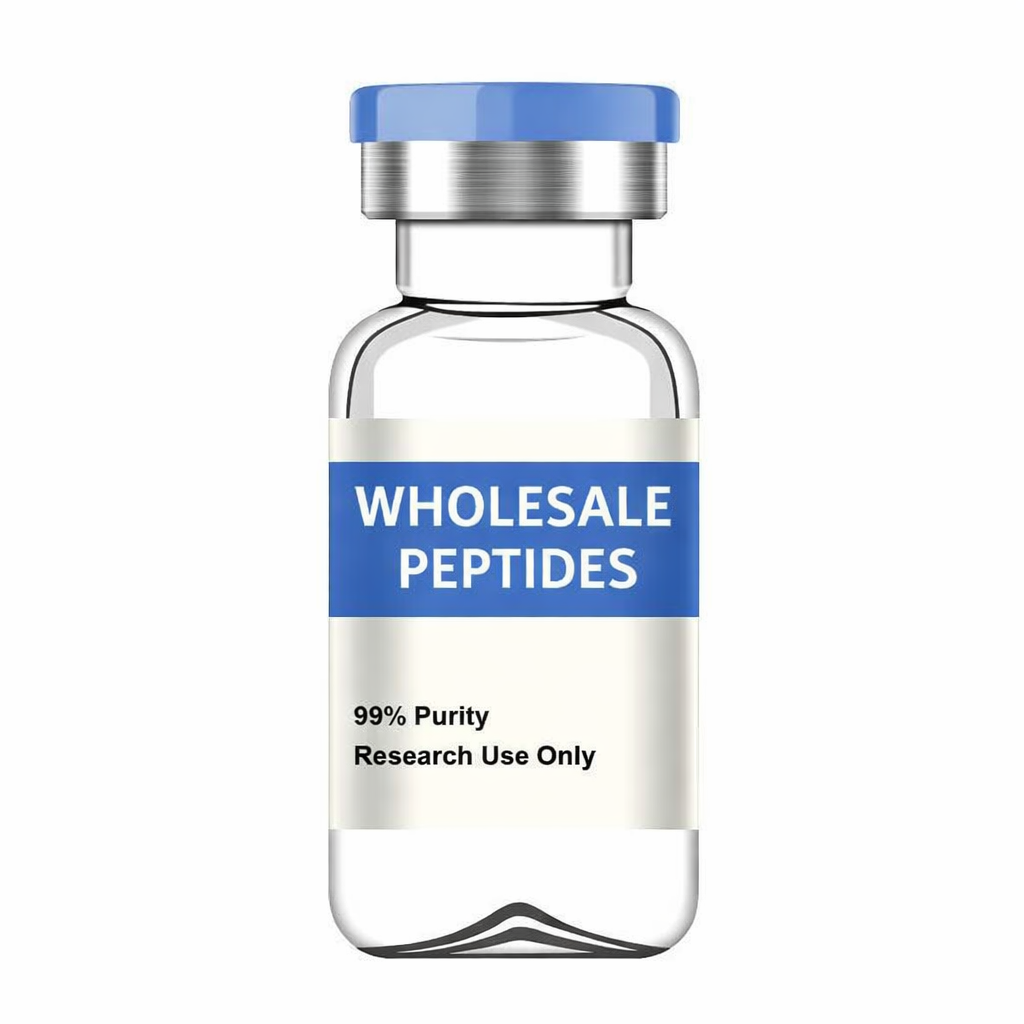
NAD+ 100mg/500mg/1000mg x 10 Vials
NAD+ 100mg/500mg/1000mg x 10 Vials are supplied for laboratory and biochemical research involving cellular metabolism, mitochondrial function, redox biology, energy pathways, and enzyme activity. This product format provides researchers with multiple strength options for controlled experimental work.
The material is associated with nicotinamide adenine dinucleotide, an important coenzyme found throughout biological systems. Researchers study this molecule because it participates in oxidation-reduction reactions and numerous cellular processes related to energy metabolism.
Research Use Only. Not for human consumption, self-administration, diagnosis, treatment, or prevention of disease.
NAD+ in Cellular Energy Research
Nicotinamide adenine dinucleotide exists primarily in two forms: an oxidized form and a reduced form known as NADH. The relationship between these forms is central to redox reactions and cellular energy metabolism.
Research involving this coenzyme can examine:
- Cellular energy production
- Mitochondrial biology
- Oxidation-reduction reactions
- Metabolic signalling
- Enzyme activity
- Cellular stress responses
- Bioenergetics
- Redox homeostasis
Because of its involvement in fundamental biochemical reactions, the molecule is widely investigated in molecular biology and cellular metabolism research.
What Is Nicotinamide Adenine Dinucleotide?
Nicotinamide adenine dinucleotide is a naturally occurring coenzyme consisting of two nucleotide components connected through phosphate groups.
It functions as an electron carrier in numerous enzymatic reactions. During these reactions, the oxidized and reduced forms can participate in electron transfer.
This makes the compound particularly relevant to research involving:
- Mitochondrial respiration
- Glycolysis
- The citric acid cycle
- Oxidative phosphorylation
- Fatty-acid metabolism
- Redox signalling
- Cellular energy balance
The scientific importance of this coenzyme extends across many areas of biochemical and cellular research.
NAD+ and Redox Biology
Redox biology examines chemical processes involving the transfer of electrons between molecules.
The NAD+/NADH pair is an important component of this research because the relative balance between its oxidized and reduced forms can influence numerous metabolic reactions.
Researchers may investigate this relationship when studying:
- Oxidative metabolism
- Cellular redox state
- Mitochondrial activity
- Metabolic adaptation
- Oxidative stress
- Enzyme-dependent reactions
This makes the compound useful as a subject of controlled biochemical investigations.
Mitochondrial Research
Mitochondria are responsible for many of the processes involved in cellular energy production. Several mitochondrial pathways depend on electron-transfer reactions involving nicotinamide cofactors.
Consequently, researchers investigate these pathways in models of:
- Mitochondrial bioenergetics
- Cellular respiration
- Metabolic flexibility
- Energy production
- Oxidative stress
- Mitochondrial signalling
The compound therefore has relevance to research extending from basic cell biology to advanced metabolic studies.
NAD+ and Enzyme Research
A wide range of enzymes interact with nicotinamide cofactors. One important research area involves enzymes known as sirtuins, which are involved in cellular signalling and protein modification.
Other research areas include enzymes associated with:
- DNA damage responses
- Metabolic regulation
- Protein modification
- Cellular stress
- Gene regulation
- Energy metabolism
These pathways have contributed to continued scientific interest in nicotinamide metabolism.
Cellular Metabolism Research
Cellular metabolism involves interconnected pathways that allow cells to process nutrients and maintain energy balance.
Nicotinamide coenzymes participate in several of these pathways, making them relevant to metabolic research involving carbohydrates, fatty acids, amino acids, and other substrates.
Laboratory studies may therefore examine relationships between coenzyme availability, enzyme activity, metabolic flux, and cellular energy requirements.
NAD+ and Cellular Signalling
Beyond energy metabolism, this coenzyme is connected with several signalling processes.
Researchers continue to investigate relationships between cellular NAD metabolism and:
- DNA repair mechanisms
- Sirtuin activity
- Protein acetylation
- Oxidative stress responses
- Mitochondrial signalling
- Cellular ageing pathways
These areas remain important subjects within molecular and cellular biology.
NAD+ and Ageing Research
Nicotinamide metabolism has attracted considerable scientific interest in the field of ageing biology.
Researchers investigate how cellular coenzyme availability may interact with processes such as:
- Cellular senescence
- DNA damage
- Mitochondrial function
- Oxidative stress
- Metabolic changes
- Cellular repair pathways
However, laboratory findings should not automatically be interpreted as evidence that supplementation or administration produces a particular anti-ageing effect in humans.
Available Vial Formats
This product is available in three labelled strength options.
| Strength | Quantity | Total labelled amount |
|---|---|---|
| 100mg | 10 vials | 1,000mg |
| 500mg | 10 vials | 5,000mg |
| 1000mg | 10 vials | 10,000mg |
The stated totals represent the labelled amount across the corresponding number of vials.
Researchers can select the appropriate format according to their laboratory requirements, experimental design, and analytical methodology.
Research Applications
This material may be relevant to laboratory investigations involving:
Mitochondrial Biology
Studies can examine energy production, electron transport, mitochondrial respiration, and cellular bioenergetics.
Metabolic Science
Researchers may investigate carbohydrate metabolism, lipid metabolism, metabolic signalling, and enzyme activity.
Redox Research
The oxidized/reduced cofactor relationship makes this molecule relevant to controlled studies of electron transfer and cellular redox balance.
Cellular Ageing
Research may explore relationships between nicotinamide metabolism, DNA repair, mitochondrial changes, and cellular senescence.
Molecular Biology
The compound can be incorporated into research examining enzyme systems, signalling pathways, and biochemical reactions.
NAD+ vs NADH
Although they are closely related, NAD+ and NADH represent different chemical states of the same coenzyme system.
| Feature | Oxidized form | Reduced form |
|---|---|---|
| Chemical state | Electron acceptor | Electron donor |
| Relationship | Converts to reduced form | Converts back to oxidized form |
| Research area | Redox metabolism | Electron-transfer metabolism |
| Biological relevance | Energy and signalling pathways | Cellular reducing reactions |
Studying both forms can provide researchers with a broader understanding of cellular redox processes.
NAD+ vs NMN vs NR
Nicotinamide mononucleotide (NMN) and nicotinamide riboside (NR) are related to nicotinamide metabolism but are chemically distinct from the finished coenzyme.
| Compound | General research classification |
|---|---|
| NAD+ | Cellular coenzyme |
| NADH | Reduced coenzyme form |
| NMN | Nicotinamide nucleotide |
| NR | Nicotinamide riboside |
These compounds should not be treated as interchangeable materials because they differ in structure, metabolism, and experimental use.
Product Quality and Research Standards
For laboratory research, product documentation and consistency are important considerations.
Researchers should review available documentation concerning:
- Identity
- Purity
- Batch information
- Manufacturing standards
- Certificate of Analysis where supplied
- Packaging
- Storage requirements
Reliable documentation helps researchers maintain consistency between experiments and evaluate material suitability for their specific protocols.
Storage Considerations
Storage requirements should always follow the supplier’s current product documentation and label instructions.
Researchers should consider:
- Protecting the material from unsuitable environmental conditions
- Keeping packaging appropriately sealed
- Avoiding unnecessary exposure to moisture
- Following stated temperature requirements
- Checking product documentation before laboratory use
Different formulations can have different stability characteristics, so the supplied documentation should take priority.
Research-Only Information
This material is intended for laboratory and scientific research.
It is not presented as a medicine, dietary supplement, or treatment. Nothing on this page should be interpreted as medical advice or as evidence that the material can diagnose, prevent, or treat a disease.
Researchers should follow applicable laboratory safety procedures, institutional requirements, and local regulations when handling research materials.
Frequently Asked Questions
What is NAD+?
NAD+ refers to the oxidized form of nicotinamide adenine dinucleotide, a coenzyme involved in numerous cellular redox and metabolic reactions.
What is NADH?
NADH is the reduced form of the same coenzyme system. It participates in electron-transfer reactions involved in cellular metabolism.
Why is this compound studied in mitochondrial research?
Mitochondria rely on numerous electron-transfer reactions for energy production, making nicotinamide cofactors relevant to mitochondrial bioenergetics research.
Is this the same as NMN?
No. NMN is a different molecule that participates in nicotinamide metabolism. It should not be considered chemically identical to the finished coenzyme.
What are the available formats?
The available options are 100mg, 500mg, and 1000mg per vial, with each format supplied as a pack of 10 vials.
Is this product intended for human use?
No. This product description is intended for laboratory research purposes only. It is not intended for human consumption or self-administration.
Summary
NAD+ 100mg/500mg/1000mg x 10 vials provides three multi-vial quantity options for laboratories investigating cellular and biochemical processes.
The material is relevant to research involving nicotinamide adenine dinucleotide, mitochondrial function, cellular energy, redox biology, metabolism, sirtuin activity, oxidative stress, and ageing biology.
The NAD+/NADH system plays an important role in electron transfer and cellular metabolism, making it a significant subject within molecular and biochemical research.
Research Use Only. Not for human or veterinary consumption or self-administration..
nad i,
nad iv therapy,
nad meaning medical,
nad patches,
nad supplements. .
| MG | 100MG, 500MG, 1000MG |
|---|
Related products
Performance & Muscle Building
GLP-1 / Weight Loss
Recovery & Wellness
GLP-1 / Weight Loss
GLP-1 / Weight Loss
Performance & Muscle Building
GLP-1 / Weight Loss
Performance & Muscle Building