
MY BLOG POST
Retatrutide Dosage: Clinical Trial Doses, Escalation and Research Guide

Sep
Introduction
Retatrutide dosage is one of the most searched topics surrounding this investigational compound. As research has progressed from Phase 2 into larger Phase 3 programs, scientists have evaluated different dose levels, escalation schedules and treatment durations.
Retatrutide is being studied as a triple-receptor agonist involving GIP, GLP-1 and glucagon. Clinical trials have investigated how different amounts may affect body weight, glucose regulation, tolerability and other metabolic outcomes.
It is important to understand that clinical-trial doses are research protocols, not instructions for personal use. Retatrutide remains investigational and has not been approved for routine human treatment.
What Is Retatrutide?
Retatrutide, sometimes called Reta or LY3437943, is an investigational compound developed by Eli Lilly.
It is being studied because it activates three hormone receptors:
-
GIP
-
GLP-1
-
Glucagon
This triple-action mechanism is one of the main reasons scientists are interested in the compound.
GIP and Metabolic Signalling
GIP is a naturally occurring hormone involved in nutrient sensing and metabolic regulation.
Researchers are investigating how GIP activity may complement the effects of GLP-1 and glucagon.
GLP-1 and Appetite Regulation
GLP-1 is involved in glucose regulation, appetite signalling and gastrointestinal function.
Its role is particularly relevant when researchers study changes in food intake and body weight.
Glucagon and Energy Metabolism
Glucagon plays an important role in energy regulation.
Its inclusion gives retatrutide a mechanism that differs from compounds that primarily activate the GLP-1 pathway.
Why Is the Dose Being Studied?
Clinical development involves more than finding an amount that produces a particular effect.
Researchers need to understand the relationship between:
-
Amount administered
-
Biological response
-
Weight changes
-
Metabolic outcomes
-
Tolerability
-
Adverse events
-
Long-term safety
A useful research dose must therefore be considered alongside its safety and tolerability profile.
This is why clinical trials often evaluate several groups rather than testing only one amount.
Retatrutide Dosage in Clinical Trials
The amounts investigated have varied between studies.
In the Phase 2 obesity trial, researchers evaluated 1 mg, 4 mg, 8 mg and 12 mg treatment groups, with some groups using lower starting amounts followed by gradual escalation. All study treatments were administered once weekly for 48 weeks.
The Phase 3 TRIUMPH program has investigated target groups of:
-
4 mg
-
9 mg
-
12 mg
Participants in these studies began at 2 mg once weekly and then increased their amount every four weeks according to the study protocol.
These figures describe clinical research protocols only.
Understanding the Weekly Schedule
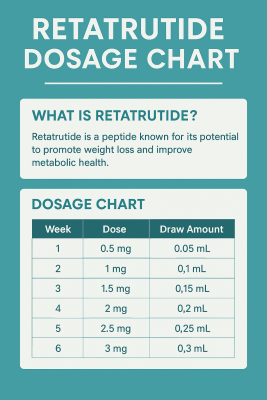
Retatrutide has been studied as a once-weekly subcutaneous treatment.
In the Phase 3 TRIUMPH-1 protocol, participants assigned to retatrutide started at 2 mg once weekly. The amount was then increased every four weeks until participants reached their assigned target group.
The research pathways included:
-
4 mg target: 2 mg → 4 mg
-
9 mg target: 2 mg → 4 mg → 6 mg → 9 mg
-
12 mg target: 2 mg → 4 mg → 6 mg → 9 mg → 12 mg
These sequences show how the clinical studies were designed. They should not be copied as a personal treatment plan.
Why Is Escalation Used?
Gradual escalation allows researchers to observe tolerability as exposure increases.
This is particularly relevant because gastrointestinal adverse events have been reported during clinical research.
A controlled study can monitor participants and make predefined adjustments when necessary.
That is very different from independently increasing an investigational compound without medical oversight.
Phase 2 Research and Dose Levels
The earlier Phase 2 obesity trial provides some of the most detailed published information about different amounts.
Researchers studied 338 adults with obesity or overweight plus a weight-related condition.
The study included 1 mg, 4 mg, 8 mg and 12 mg groups, with some groups starting at 2 mg or 4 mg before escalation.
At 48 weeks, average weight changes were:
| Study group | Average weight change |
|---|---|
| 1 mg | −8.7% |
| Combined 4 mg | −17.1% |
| Combined 8 mg | −22.8% |
| 12 mg | −24.2% |
| Placebo | −2.1% |
The results demonstrated a dose-related pattern, although individual responses varied.
What Do These Numbers Mean?
These percentages represent average changes within a clinical-study population.
They do not mean that everyone receiving a particular study amount will experience the same result.
Clinical outcomes can be affected by many factors, including:
-
Starting body weight
-
Age
-
Metabolic health
-
Diet
-
Physical activity
-
Treatment adherence
-
Individual biology
-
Other medications
For this reason, clinical-trial averages should not be presented as guaranteed outcomes.
Phase 3 Research and Target Groups
Phase 3 studies have provided additional information about how researchers are evaluating different target amounts.
TRIUMPH-1 investigated 4 mg, 9 mg and 12 mg target groups. Participants began at 2 mg and increased the amount every four weeks according to their assigned research pathway.
Other Phase 3 studies have also used 9 mg and 12 mg target groups.
The broader clinical development program therefore allows researchers to compare different exposure levels while evaluating effectiveness and tolerability.
How Do Researchers Decide Which Amount to Study?

Clinical researchers consider multiple factors when designing dose-ranging studies.
These can include:
Pharmacokinetics
Researchers examine how the compound is absorbed, distributed and eliminated by the body.
Pharmacodynamics
Scientists evaluate how exposure relates to biological effects.
Effectiveness
Researchers measure outcomes such as body-weight change and metabolic markers.
Tolerability
Adverse events and treatment discontinuations are monitored carefully.
Long-Term Safety
Researchers need to understand what happens with continued exposure over longer periods.
A target amount is therefore not selected simply because it produces the largest measurable effect.
Dose and Tolerability
One of the important findings from earlier research was the relationship between the amount studied and gastrointestinal tolerability.
The Phase 2 trial reported gastrointestinal adverse events as the most common events. These were generally mild to moderate and showed a dose-related pattern. The researchers also found that using a lower starting amount partially reduced these events.
This helps explain why later studies have used structured escalation protocols.
Commonly Monitored Effects
Researchers have monitored symptoms such as:
-
Nausea
-
Diarrhea
-
Vomiting
-
Constipation
-
Reduced appetite
-
Other gastrointestinal symptoms
Heart-rate changes have also been monitored during clinical development.
Does a Higher Amount Always Mean Better Results?
Not necessarily.
Clinical development is about finding an appropriate balance between potential effectiveness and tolerability.
Higher study amounts have produced larger average weight reductions in some trials, but they can also be associated with more adverse events.
Researchers therefore evaluate the entire benefit-risk profile rather than focusing on weight change alone.
This is an important distinction when reading online discussions about different dose levels.
Retatrutide Dosage and Weight-Loss Research
The relationship between study amount and weight reduction has been one of the major areas of interest.
In the Phase 2 trial, higher study groups generally experienced greater average reductions in body weight over 48 weeks.
More recent Phase 3 research has continued to investigate 4 mg, 9 mg and 12 mg target groups over longer periods.
Lilly reported that the TRIUMPH-1 trial produced substantial average weight reductions at 80 weeks across the studied target groups.
These findings are encouraging from a research perspective, but they remain clinical-trial results rather than a guarantee for an individual.
What Is the Difference Between a Starting Amount and a Target Amount?
This distinction is important when reading clinical-trial information.
A starting amount is the initial amount used when participants enter the study.
A target amount is the planned level that participants are intended to reach according to their assigned research group.
For example, a participant in a 12 mg study group may start at 2 mg and gradually progress through predefined levels.
Therefore, seeing “12 mg” in a clinical-trial report does not mean that participants necessarily received 12 mg from their first administration.
Is There an Approved Retatrutide Dose?
No approved routine-use dose currently exists.
Retatrutide remains an investigational compound, and the doses discussed in clinical publications describe research protocols.
Lilly states that retatrutide is an investigational molecule and that it is not legally available for general human use outside applicable clinical research.
This is an important distinction for websites discussing the compound.
Clinical-trial information should not be presented as an established prescription schedule.
Can Clinical-Trial Doses Be Used as Personal Instructions?
No.
Clinical trials operate under controlled conditions that include:
-
Participant screening
-
Eligibility criteria
-
Medical monitoring
-
Laboratory testing
-
Safety assessments
-
Defined escalation protocols
-
Adverse-event reporting
A person outside a clinical trial does not necessarily have the same medical supervision or monitoring.
Therefore, published research amounts should be treated as educational information rather than instructions for self-administration.
What Should Researchers Look for in Future Studies?
As clinical development continues, future research may provide additional information about:
-
Long-term safety
-
Optimal target groups
-
Treatment durability
-
Body-composition changes
-
Cardiometabolic outcomes
-
Tolerability
-
Different patient populations
-
Comparisons with other treatments
Additional evidence will help determine the eventual clinical role of the compound.

How to Read Online Dosage Information Carefully
Search engines contain a mixture of scientific information, personal experiences and commercial content.
When researching this topic, consider the source.
Look for Clinical Evidence
Peer-reviewed studies and registered clinical trials provide stronger evidence than anonymous posts or promotional pages.
Check the Date
Research develops rapidly, so older information may not reflect the latest clinical findings.
Separate Research From Medical Advice
A study describing a research protocol does not automatically create a recommended treatment schedule.
Be Careful With Guaranteed Claims
Statements promising a specific amount of weight loss should be treated cautiously.
Clinical trials report averages, ranges and statistical outcomes rather than guarantees.
Frequently Asked Questions
What is retatrutide dosage in clinical research?
Clinical studies have investigated several amounts. Phase 2 research evaluated 1 mg, 4 mg, 8 mg and 12 mg groups, while later Phase 3 programs have focused on target groups including 4 mg, 9 mg and 12 mg.
How often has retatrutide been administered?
Clinical trials have investigated once-weekly subcutaneous administration.
What starting amount has been used in Phase 3 trials?
Several Phase 3 trials have started participants at 2 mg once weekly before gradually increasing toward their assigned target group.
Why do studies increase the amount gradually?
Gradual escalation allows researchers to evaluate tolerability and monitor adverse events as exposure increases.
Are 9 mg and 12 mg approved treatment doses?
No. They are target amounts studied in clinical research and should not be interpreted as approved treatment doses.
Does a higher study amount produce more weight loss?
Higher amounts have generally produced greater average weight reductions in some clinical studies, but they may also be associated with increased adverse events.
Can someone follow a clinical-trial dosing schedule independently?
Clinical-trial schedules are designed for controlled research environments and should not be treated as personal treatment instructions.
Is retatrutide currently approved?
No. It remains investigational.
Final Thoughts
Understanding retatrutide dosage requires more than looking at a single number.
Clinical research has investigated several amounts, with Phase 2 studies evaluating 1 mg, 4 mg, 8 mg and 12 mg groups and later Phase 3 programs examining target groups including 4 mg, 9 mg and 12 mg. Researchers have also studied gradual escalation beginning at a lower amount.
The purpose of these studies is to understand the relationship between exposure, effectiveness and tolerability.
For readers researching retatrutide, the most important distinction is between clinical-trial data and approved medical dosing. Retatrutide remains investigational, so research protocols should not be presented as personal treatment recommendations.
TheWholesalePeptides.co.uk provides educational information about peptide research and investigational compounds. Always consider current scientific evidence and applicable regulatory requirements when evaluating research information.
Research use only. Not for human consumption. This article is for educational and research purposes and is not medical advice.
retatrutide dosage, retatrutide dosage, retatrutide dosage, retatrutide dosage, retatrutide dosage, retatrutide dosage, retatrutide dosage, retatrutide dosage, retatrutide dosage, retatrutide dosage, retatrutide dosage, retatrutide dosage, retatrutide dosage, retatrutide dosage,
retatrutide side effects,
reta peptide,
retatrutide dosage,
retatrutide dosing,
what is reta,
retatrutide how to get,
retatrutide pen,
buy retatrutide,
retatrutide cost,
retatrutide buy,
retatrutide dose.
