
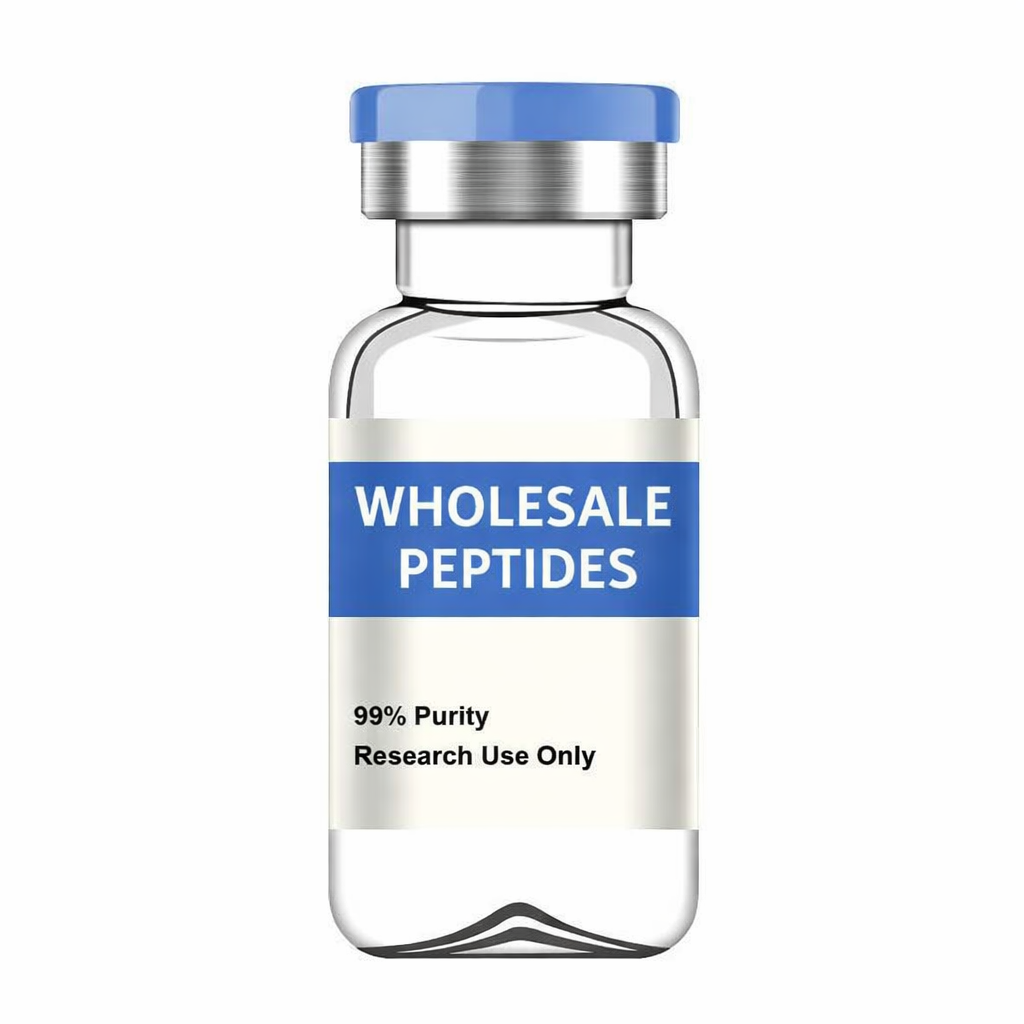
Ipamorelin x 10 Vials
Ipamorelin x 10 Vials are supplied as a research material for laboratory investigations into growth hormone signalling, peptide receptor biology, pituitary pathways, and neuroendocrine regulation.
Ipamorelin is a synthetic pentapeptide that belongs to the growth hormone secretagogue family. Research has focused on its interaction with the growth hormone secretagogue receptor (GHS-R1a) and the resulting effects on growth hormone-related signalling.
Research Use Only. Not for human consumption, self-administration, diagnosis, treatment, or prevention of disease.
Ipamorelin in Growth Hormone Research
Growth hormone regulation involves a complex communication network between the hypothalamus, pituitary gland, and peripheral tissues.
Secretagogue research provides scientists with models for investigating receptor-mediated endocrine signalling.
Research areas associated with this peptide include:
- Growth hormone signalling
- GHS-R1a receptor biology
- Pituitary research
- Neuroendocrine signalling
- Endocrine regulation
- Peptide receptor research
- Cellular signal transduction
These pathways are relevant to molecular endocrinology and experimental hormone research.
What Is Ipamorelin?
Ipamorelin is a synthetic five-amino-acid peptide classified as a growth hormone secretagogue.
Unlike growth hormone itself, it is studied for its ability to interact with a specific receptor system associated with growth hormone release. This makes it useful as a research model for investigating secretagogue signalling and pituitary physiology.
Its relatively selective research profile has also made it a subject of comparative studies involving other secretagogue peptides.
GHS-R1a Receptor Research
The growth hormone secretagogue receptor 1a (GHS-R1a) is a G-protein-coupled receptor associated with the ghrelin signalling system.
Receptor research can examine how ligand interaction initiates intracellular signalling events.
Relevant areas include:
- GPCR activation
- Calcium signalling
- Intracellular signal transduction
- Pituitary cell activity
- Hormone secretion pathways
- Neuroendocrine communication
Understanding these mechanisms helps researchers investigate how extracellular peptide signals can influence cellular behaviour.
Pituitary Signalling
The anterior pituitary contains specialised cells known as somatotrophs that produce growth hormone.
Their activity is regulated by multiple signals, including:
- Growth hormone-releasing hormone
- Somatostatin
- Ghrelin-related signalling
- Growth hormone secretagogue pathways
- Feedback mechanisms
Secretagogue research provides a model for studying how receptor activation can interact with these broader regulatory systems.
Growth Hormone Secretagogue Research
Growth hormone secretagogues are a diverse group of synthetic compounds investigated for their interaction with endocrine signalling pathways.
Researchers may compare different molecules to understand differences in:
- Receptor affinity
- Receptor selectivity
- Signal transduction
- Hormonal responses
- Molecular structure
- Pharmacological characteristics
Such comparisons can help distinguish individual peptide properties from general effects associated with secretagogue receptor activation.
Ipamorelin and GHS-R1a
The relationship between this peptide and GHS-R1a is central to much of the scientific literature surrounding it.
Research into the receptor system can provide insight into:
- Growth hormone regulation
- GPCR signalling
- Pituitary physiology
- Neuroendocrine communication
- Cellular signalling
- Hormonal feedback
The biological response observed in an experimental model can vary depending on the system being studied, receptor expression, experimental conditions, and other variables.
Endocrine Research Applications
This research material may be relevant to laboratory investigations involving:
Growth Hormone Pathways
Researchers can investigate mechanisms associated with growth hormone secretion and regulation.
Pituitary Biology
Experimental models can examine signalling within growth hormone-producing pituitary cells.
Receptor Pharmacology
GHS-R1a provides a useful model for studying peptide-receptor interactions and GPCR signalling.
Neuroendocrinology
The signalling network connects neuronal and endocrine systems, making it relevant to neuroendocrine research.
Hormonal Regulation
Researchers can explore relationships among secretagogues, hypothalamic signals, pituitary hormones, and downstream pathways.
Ipamorelin vs GHRP-6
Both peptides are associated with the growth hormone secretagogue family, but they are structurally different molecules.
| Feature | Ipamorelin | GHRP-6 |
|---|---|---|
| Classification | Synthetic secretagogue peptide | Synthetic secretagogue peptide |
| Research receptor | GHS-R1a | GHS-R1a |
| Peptide structure | Pentapeptide | Hexapeptide |
| Research focus | Growth hormone and receptor signalling | Growth hormone and receptor signalling |
| Comparative research | Receptor selectivity and endocrine signalling | Secretagogue and ghrelin-related signalling |
Comparative experiments can help researchers evaluate how molecular structure influences receptor behaviour.
Ipamorelin vs GHRP-2
GHRP-2 and Ipamorelin are also distinct secretagogue peptides.
Although both have been investigated in relation to GHS-R1a, differences in molecular structure and receptor pharmacology make them separate research materials.
Researchers comparing the two may examine:
- Receptor activation
- Signal intensity
- Cellular responses
- Hormonal signalling
- Pharmacological profiles
This type of comparative work is useful in peptide receptor research.
Growth Hormone and IGF Signalling
Growth hormone signalling is connected with the broader insulin-like growth factor (IGF) system.
Research into the somatotropic axis may investigate relationships between:
- Hypothalamic signals
- Pituitary growth hormone
- Hepatic IGF-1 production
- IGF receptor signalling
- Tissue-specific responses
- Endocrine feedback
These systems are interconnected but should not be treated as identical pathways.
Neuroendocrine Research
Neuroendocrinology examines communication between the nervous system and endocrine system.
Secretagogue receptor pathways are relevant because hypothalamic and pituitary signalling operate within a larger neuroendocrine network.
Research may explore how peptide signals interact with:
- Hypothalamic neurons
- Pituitary cells
- Hormonal feedback loops
- Receptor-mediated signalling
- Metabolic pathways
This provides a broader context for laboratory studies involving endocrine peptides.
Metabolic Signalling Research
GHS-R1a-related research also extends into metabolic biology.
The ghrelin receptor system has been investigated in relation to:
- Energy balance
- Nutrient signalling
- Appetite-associated pathways
- Glucose metabolism
- Lipid metabolism
- Cellular energy regulation
These remain complex research areas, and experimental observations should not automatically be interpreted as clinical benefits.
Ipamorelin x 10 Vials Format
The product format described here contains 10 individual research vials.
The exact labelled quantity per vial should be confirmed from the current product specification and packaging.
Researchers should not assume a specific total peptide mass without checking the individual vial strength.
Product Quality and Documentation
Quality documentation is an important consideration when selecting research peptides.
Researchers should review available information relating to:
- Peptide identity
- Purity
- Batch or lot number
- Certificate of Analysis
- Analytical testing
- Manufacturing specifications
- Packaging
- Storage requirements
Batch-specific information can help researchers evaluate consistency and suitability for experimental applications.
Storage Considerations
Storage should follow the manufacturer’s current product documentation.
Researchers should pay attention to:
- Temperature
- Moisture
- Light exposure
- Packaging integrity
- Stability information
- Handling requirements
Different formulations may have different stability characteristics, so product-specific instructions should take priority.
Research-Only Information
This material is presented exclusively for scientific and laboratory research.
It is not presented as a medicine, hormone replacement product, bodybuilding treatment, or nutritional supplement. Experimental findings should not automatically be interpreted as evidence of safety or effectiveness in humans.
Researchers should follow appropriate laboratory safety procedures, institutional policies, and applicable regulations.
Frequently Asked Questions
What is Ipamorelin?
Ipamorelin is a synthetic pentapeptide studied as a growth hormone secretagogue and investigated in relation to GHS-R1a receptor signalling.
What is GHS-R1a?
GHS-R1a is the growth hormone secretagogue receptor, a G-protein-coupled receptor associated with ghrelin and endocrine signalling.
Is it growth hormone?
No. It is a synthetic peptide studied for secretagogue-related signalling and is chemically different from growth hormone itself.
Is Ipamorelin the same as GHRP-6?
No. They are separate peptides with different molecular structures, although both are studied in relation to growth hormone secretagogue pathways.
Is it the same as GHRP-2?
No. GHRP-2 and Ipamorelin are different peptides that have been investigated in relation to the GHS-R1a receptor.
What research areas are relevant?
Research areas include pituitary biology, GHS-R1a receptor activity, growth hormone signalling, neuroendocrinology, endocrine research, and peptide receptor pharmacology.
How many vials are included?
The listed format contains 10 individual research vials. The exact amount per vial should be verified from the product label.
Is this product intended for human use?
No. It is presented for laboratory research only and is not intended for human consumption or self-administration.
Summary
Ipamorelin x 10 Vials provide a multi-vial research format for studies involving growth hormone secretagogue activity, GHS-R1a receptor biology, pituitary signalling, neuroendocrine pathways, and endocrine research.
Its role as a synthetic secretagogue makes it relevant to controlled investigations into peptide-receptor interactions and growth hormone-related signalling. Researchers should rely on current product documentation and appropriate laboratory procedures when evaluating this material.
ipamorelin,
cjc 1295,
cjc-1295,
cjc 1295 ipamorelin,
cjc1295,
ipamorelin peptide,
cjc-1295 ipamorelin,
cjc peptide,
ipamorelin dosage.
| MG | 5MG, 10MG |
|---|
Related products
Performance & Muscle Building
Longevity & Cellular Health
GLP-1 / Weight Loss
Performance & Muscle Building
GLP-1 / Weight Loss
GLP-1 / Weight Loss
Recovery & Wellness
Longevity & Cellular Health