
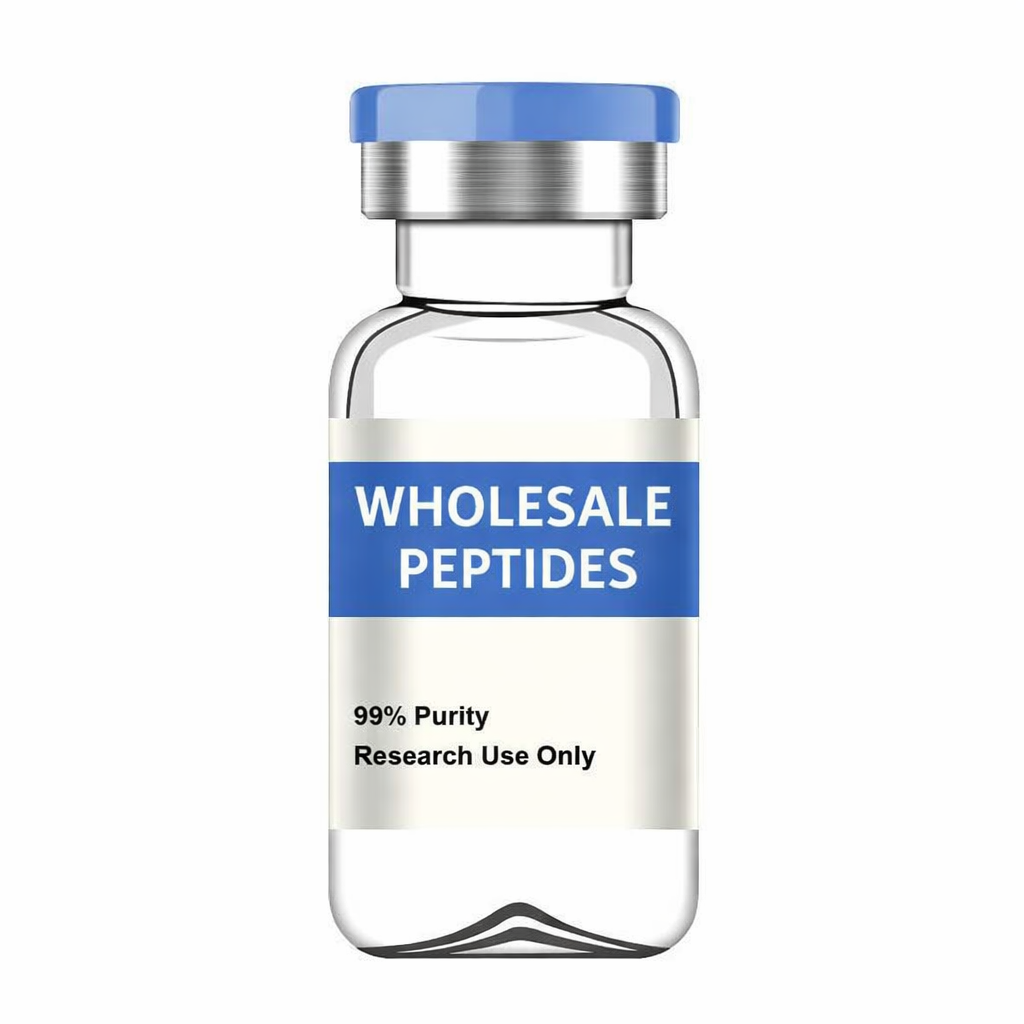
SNAP-8 10mg x 10 Vials
SNAP-8 is a synthetic cosmetic peptide also known as Acetyl Octapeptide-3. It is studied in cosmetic science, skin biology, peptide formulation, and cellular signalling, with particular interest surrounding molecular mechanisms associated with facial expression lines.
This SNAP-8 10mg x 10 vials format contains ten individually packaged 10mg quantities, providing a total labelled quantity of 100mg. The material is intended for laboratory and research applications rather than human or veterinary use.
Research into this peptide focuses on its molecular structure, relationship to SNAP-25, peptide-protein interactions, and potential relevance to cosmetic ingredient development.
Product Overview
The product format includes:
- 10 individual vials
- 10mg labelled quantity per vial
- 100mg total labelled quantity
- Synthetic peptide material
- Acetyl Octapeptide-3
- Research-oriented packaging
- Suitable for laboratory investigation
Researchers should verify the exact specification, purity, batch information, and analytical documentation supplied with their material.
SNAP-8 in Cosmetic Peptide Research
SNAP-8 has become an area of interest within cosmetic peptide research because of its relationship to molecular pathways involved in cellular communication.
Short-chain peptides can be investigated to understand their structural properties, interactions with proteins, stability, and behaviour within experimental formulations.
Relevant research areas include:
- Cosmetic peptide science
- Skin biology
- Cellular signalling
- Peptide-protein interactions
- Expression-line research
- Cosmetic formulation
- Ingredient stability
- Molecular biology
The existence of a proposed molecular mechanism does not automatically demonstrate a cosmetic or clinical effect in humans.
What Is Acetyl Octapeptide-3?
Acetyl Octapeptide-3 is a synthetic eight-residue peptide associated with cosmetic ingredient research.
Its scientific interest is partly related to its sequence relationship with a region of SNAP-25, a protein involved in the SNARE complex and neurotransmitter-release processes.
This connection gives researchers an opportunity to investigate molecular interactions involving short peptide sequences and larger protein complexes.
The ingredient is therefore relevant to both cosmetic formulation studies and broader molecular biology research.
SNAP-8 and SNARE-Related Research
The SNARE complex is a group of proteins involved in intracellular membrane fusion.
These proteins help facilitate the fusion of vesicles with cellular membranes, an important process involved in the release and transport of biological molecules.
Because of its structural relationship to SNAP-25, the peptide has attracted research interest surrounding mechanisms associated with SNARE-complex activity.
Protein-Protein Interactions
Researchers can investigate how short peptide sequences interact with larger proteins and molecular complexes.
Vesicle Biology
Vesicle fusion is an important cellular process involved in intracellular transport and molecular release.
Cellular Communication
Cells depend on highly coordinated signalling systems to communicate with their surrounding environment.
Skin Biology Research
SNAP-8 is particularly relevant to research involving cosmetic science and skin biology.
Human skin contains numerous cell types, structural proteins, signalling molecules, and extracellular-matrix components.
Laboratory research can examine how peptide ingredients behave within experimental skin models and cosmetic formulations.
Research areas may include:
- Skin-cell biology
- Dermal research
- Extracellular-matrix studies
- Cosmetic ingredient development
- Peptide stability
- Skin-barrier research
- Formulation science
- Cellular signalling
These investigations can provide information about peptide behaviour under controlled experimental conditions.
Expression-Line Research
Facial expression lines are influenced by repeated facial movement, muscle activity, skin structure, and biological ageing processes.
Cosmetic peptide research has investigated molecular pathways associated with these processes.
The research should be interpreted carefully. Laboratory findings cannot guarantee a particular cosmetic result, and research-grade material should not be represented as equivalent to medical procedures or pharmaceutical treatments.
Cosmetic Formulation Research
Formulation is an important consideration when studying peptide ingredients.
The stability and behaviour of a peptide can depend on its surrounding environment.
Researchers may examine:
- pH compatibility
- Solubility
- Peptide stability
- Vehicle composition
- Ingredient compatibility
- Temperature stability
- Packaging
- Storage conditions
These factors can influence how experimental materials behave in different formulation systems.
Related Cosmetic Peptides
Acetyl Octapeptide-3 is sometimes discussed alongside other cosmetic peptides, including Acetyl Hexapeptide-8, commonly associated with Argireline.
Although the ingredients have related research backgrounds, they are different molecules.
| Feature | Acetyl Octapeptide-3 | Acetyl Hexapeptide-8 |
|---|---|---|
| Peptide type | Synthetic cosmetic peptide | Synthetic cosmetic peptide |
| Chain length | Eight residues | Six residues |
| Research area | Cosmetic and molecular biology | Cosmetic and molecular biology |
| Structural relationship | Related to SNAP-25 research | SNAP-25-derived sequence |
| Identical compound | No | No |
Researchers should use the correct chemical identity when comparing experimental materials.
Research Evidence and Limitations
Scientific evidence should always be evaluated according to the type and quality of the study.
Laboratory experiments can provide information about molecular mechanisms, while formulation studies can examine ingredient behaviour. Human research provides a different level of evidence and requires appropriate study design.
Evidence surrounding this cosmetic ingredient has limitations. Research involving combination formulations can make it difficult to determine how much of an observed effect is attributable to the individual peptide.
For this reason, claims involving guaranteed wrinkle reduction, specific percentages of improvement, or comparisons with botulinum toxin should be approached cautiously.
SNAP-8 10mg x 10 Vials Format
The product contains ten individually packaged 10mg vials.
This provides:
10 × 10mg = 100mg total labelled quantity
Individual packaging can be useful for laboratory inventory management, sample organisation, and batch tracking.
The product label and accompanying documentation should be treated as the definitive source for the specification of the particular batch.
Peptide Quality and Documentation
Quality control is an important consideration when selecting laboratory research material.
Researchers should review available information relating to:
- Compound identity
- Purity
- Batch number
- Certificate of analysis
- Analytical testing
- Labelled quantity
- Packaging integrity
- Storage requirements
- Manufacturer documentation
Batch-specific documentation can improve traceability and help researchers maintain accurate laboratory records.
Storage Considerations
Research peptides can be affected by temperature, moisture, light, and environmental exposure.
The manufacturer’s storage instructions should always take priority.
General laboratory considerations include:
- Protecting material from excessive heat
- Avoiding unnecessary exposure to moisture
- Protecting packaging from direct sunlight
- Maintaining appropriate storage conditions
- Limiting unnecessary environmental fluctuations
- Checking vial and packaging integrity
Storage requirements may vary according to formulation and packaging.
Research-Only Information
SNAP-8 should be regarded as a research compound rather than a medicine.
Cosmetic ingredient research, laboratory studies, and clinical medicine operate under different standards of evidence and regulation.
Research-grade material should not be described as a treatment for wrinkles, skin ageing, neurological conditions, or other medical conditions without appropriate regulatory approval and supporting clinical evidence.
Frequently Asked Questions
What is SNAP-8?
SNAP-8 is a synthetic cosmetic peptide commonly identified as Acetyl Octapeptide-3 and studied in cosmetic and molecular biology research.
How many vials are included?
The product contains 10 individual vials.
How much is in each vial?
Each vial contains a labelled quantity of 10mg.
What is the total quantity?
Ten 10mg vials provide a total labelled quantity of 100mg.
What is Acetyl Octapeptide-3 researched for?
Research includes cosmetic peptide science, skin biology, cellular signalling, peptide-protein interactions, formulation science, and SNARE-related mechanisms.
Is it the same as Argireline?
No. They are related cosmetic peptides but have different molecular structures.
Is it the same as Botox?
No. Botulinum toxin and synthetic cosmetic peptides are fundamentally different substances and should not be represented as equivalent.
Does research guarantee cosmetic results?
No. Experimental findings do not guarantee a particular result in humans.
What should researchers check before using research material?
Important considerations include identity, purity, batch information, analytical documentation, packaging, labelled quantity, and storage requirements.
Is the material intended for human use?
No. Research-grade material should be reserved for appropriate laboratory research and educational applications.
Summary
SNAP-8 10mg x 10 vials provides ten individually packaged 10mg quantities of a synthetic peptide commonly identified as Acetyl Octapeptide-3.
Its primary scientific interest lies in cosmetic peptide research, skin biology, cellular signalling, and investigation of mechanisms associated with the SNARE complex. While these mechanisms explain why the compound attracts research interest, the available evidence for isolated SNAP-8 remains limited and should not be overstated.
Research Use Only. Not for human or veterinary consumption or self-administration.
Related products
Longevity & Cellular Health
GLP-1 / Weight Loss
Longevity & Cellular Health
Performance & Muscle Building
Recovery & Wellness
Performance & Muscle Building
Longevity & Cellular Health
GLP-1 / Weight Loss