

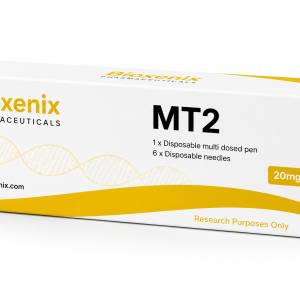
Bioxenix MT2 20mg
£35.00
Experience premium quality with Bioxenix MT2, a potent Melanotan 2 peptide designed for reliable research applications. Sourced for purity and consistency, this peptide is trusted by professionals seeking dependable results. Available exclusively at TheWholesale Peptides, Bioxenix MT2 is your choice for advanced laboratory research.
Bioxenix MT2
Bioxenix MT2 is associated with melanotan II (MT2), a synthetic peptide analogue that has been investigated for its interaction with melanocortin receptors and pathways involved in pigmentation. The compound has attracted interest in research concerning melanin production, melanocyte activity, and melanocortin signalling.
This page provides educational information about Bioxenix MT2, melanotan II, its biological background, potential research applications, storage considerations, and frequently asked questions. It is important to distinguish research information from approved medical or cosmetic treatments.
What Is Bioxenix MT2?
Bioxenix MT2 refers to a product associated with melanotan II, a synthetic analogue of naturally occurring melanocortin peptides. Melanotan II has been investigated because of its ability to interact with melanocortin receptors, particularly pathways associated with pigmentation.
The body’s natural pigmentation system involves melanocytes, specialized cells responsible for producing melanin. Melanin contributes to the color of the skin, hair, and eyes and plays an important role in the body’s response to ultraviolet exposure.
Research involving melanotan II has therefore focused on how synthetic melanocortin analogues influence these biological pathways.
What Is Melanotan II?
Melanotan II is a synthetic peptide analogue developed from research into melanocortin biology. Unlike naturally occurring hormones and peptides, synthetic analogues can be designed to interact with specific receptor systems.
Melanotan II has been studied primarily in relation to melanocortin receptors. These receptors are involved in several physiological processes, including pigmentation, energy balance, and other biological signalling pathways.
It is important to note that research interest does not automatically establish a compound as safe or approved for general human use.
How Does MT2 Relate to Melanin?
Melanin is a naturally occurring pigment produced by melanocytes. One of the biological pathways involved in pigmentation is controlled by melanocortin signalling.
When melanocortin receptors are activated, signalling pathways associated with melanogenesis can be affected. Melanogenesis is the process through which melanocytes produce melanin.
This relationship between melanocortin receptors and pigmentation is one of the main reasons melanotan II has been investigated.
Understanding Melanogenesis
Melanogenesis involves several stages, beginning with biochemical processes inside melanocytes and ultimately resulting in the production of melanin pigments.
The amount and type of melanin produced can influence visible pigmentation. Genetics, hormones, UV exposure, and other biological factors can all contribute to differences in pigmentation between individuals.
Research into melanocortin analogues helps scientists investigate these complex pathways.
Bioxenix MT2 and Melanocortin Receptors
Melanocortin receptors are part of a family of receptors involved in cellular signalling. Different melanocortin receptors have different distributions and biological functions.
Melanotan II has demonstrated activity across melanocortin receptor pathways. This broader receptor activity is important when interpreting research involving the compound because effects may extend beyond pigmentation alone.
For this reason, melanotan II should not simply be considered a conventional tanning ingredient.
Why Are Researchers Interested in MT2?
Interest in melanotan II comes from its ability to interact with melanocortin signalling pathways. Research into these pathways can provide insights into:
- Melanin production
- Melanocyte biology
- Pigmentation pathways
- Melanocortin receptor activity
- Cellular signalling
- Hormonal regulation
- Receptor pharmacology
These areas are relevant to broader research into pigmentation biology and melanocortin systems.
MT2 and Skin Pigmentation Research
Skin pigmentation is a complex biological process. Melanin production is influenced by genetic factors, cellular activity, hormones, and environmental exposure.
Melanotan II has been investigated as a tool for studying how melanocortin receptor activation can influence pigmentation. Such research may contribute to a better understanding of melanocyte behaviour and the mechanisms underlying melanin synthesis.
However, research findings should not be interpreted as evidence that an unapproved peptide is appropriate for cosmetic tanning.
Does MT2 Protect Against Sunburn?
No. Pigmentation and UV protection are not equivalent.
Even when skin pigmentation increases, exposure to ultraviolet radiation can still contribute to DNA damage, premature skin ageing, and skin cancer risk. A darker appearance should therefore never be regarded as a replacement for established sun-protection measures.
Recommended protective measures include appropriate sunscreen, protective clothing, shade, and avoiding excessive UV exposure.
Bioxenix MT2 Quality Considerations
When researching peptide products, product quality is an important consideration. Information such as identity, purity, manufacturing standards, analytical testing, packaging, labeling, and storage conditions can affect the reliability of a product.
For research materials, documentation such as analytical certificates can provide useful information about the stated composition of a batch. However, documentation should be assessed carefully and does not by itself establish that a product is safe or approved for human use.
Storage and Handling Information
Storage requirements can vary depending on the specific formulation, packaging, and manufacturer’s instructions.
Always refer to the product documentation for appropriate storage conditions. Avoid products with damaged packaging, unclear labeling, compromised seals, or uncertain storage history.
Research materials should also be handled in accordance with applicable laboratory procedures and institutional requirements.
MT2 Safety Considerations
Melanotan II is not an approved cosmetic tanning medicine in the UK. Products marketed outside regulated pharmaceutical channels may have uncertain composition, purity, sterility, concentration, or manufacturing history.
Reported effects associated with melanotan II exposure can include nausea, flushing, headache, dizziness, appetite changes, and changes in pigmentation. Other effects may also occur.
Anyone concerned about pigmentation, skin changes, or potential exposure to melanotan II should consult a qualified healthcare professional.
Bioxenix MT2 Compared With Conventional Tanning
Conventional tanning typically involves exposure to ultraviolet radiation, which stimulates biological responses in the skin but can also cause cellular damage.
Melanocortin research takes a different approach by investigating signalling pathways associated with melanin production. This distinction is important when discussing melanotan II because pigmentation research does not eliminate the risks associated with UV exposure.
A change in skin pigmentation should never be interpreted as proof that the skin is protected from UV-related damage.
Frequently Asked Questions About Bioxenix MT2
What is Bioxenix MT2?
Bioxenix MT2 is associated with melanotan II, a synthetic melanocortin analogue investigated for its interaction with melanocortin receptors and pigmentation pathways.
What does MT2 stand for?
MT2 commonly refers to melanotan II, a synthetic peptide analogue associated with research into melanocortin receptor signalling and pigmentation.
What is melanocortin signalling?
Melanocortin signalling refers to biological communication involving melanocortin peptides and their receptors. These pathways participate in several physiological processes, including pigmentation.
What is melanin?
Melanin is a natural pigment produced by specialized cells called melanocytes. It contributes to the coloration of the skin, hair, and eyes.
What is melanogenesis?
Melanogenesis is the biological process through which melanocytes produce melanin. It involves multiple biochemical pathways and regulatory mechanisms.
Is melanotan II the same as melanin?
No. Melanotan II is a synthetic peptide analogue, whereas melanin is a naturally produced pigment.
Does MT2 replace sunscreen?
No. Melanotan II should not be considered a replacement for sunscreen, protective clothing, shade, or other established methods of reducing UV exposure.
Is melanotan II approved for cosmetic tanning in the UK?
Melanotan II is not an approved cosmetic tanning medicine in the UK. Regulatory requirements can differ between countries and jurisdictions.
Can melanotan II have side effects?
Yes. Reported effects can include nausea, flushing, headache, dizziness, appetite changes, and pigmentation changes. Anyone concerned about possible exposure should seek professional medical advice.
How should Bioxenix MT2 be stored?
Storage requirements depend on the specific product and formulation. Always follow the manufacturer’s documentation and applicable laboratory handling requirements.
Research Information and Responsible Use
Understanding the difference between scientific research and consumer health claims is essential when evaluating peptide products.
A compound can have interesting pharmacological properties without being approved as a medicine or cosmetic treatment. Therefore, information about melanotan II should be interpreted within the context of available scientific evidence, regulatory status, and product-quality considerations.
Bioxenix MT2 should be evaluated based on reliable product documentation and applicable regulations rather than unsupported claims about cosmetic or physiological outcomes.
Key Terms Related to Bioxenix MT2
For readers researching melanotan II and related topics, useful terminology includes:
- Melanotan II
- MT2 peptide
- Melanocortin receptors
- Melanocortin signalling
- Melanin production
- Melanogenesis
- Melanocytes
- Skin pigmentation
- Peptide research
- Pigmentation research
- Receptor pharmacology
- Synthetic peptide analogues
These related concepts provide useful context for understanding where melanotan II fits within broader peptide and melanocortin research.
Important Information
This page is intended for educational and research-information purposes only. It is not medical advice and does not recommend the use of melanotan II for tanning, cosmetic purposes, or treatment of any medical condition.
Melanotan II is not an approved cosmetic tanning medicine in the UK. Individuals with questions about melanotan II, pigmentation, skin health, or possible exposure should consult an appropriately qualified healthcare professional.
melanotan 2,
mt2,
melanotan,
tanning injections,
mt2 peptide,
tanning injectable,
what is melanotan,
melanotan 2 peptide,
injection to tan skin,
mt ii peptide.
Related products
GLP-1 / Weight Loss
Hair & Aesthetics
Hair & Aesthetics
Pen Kits (prefilled)
GLP-1 / Weight Loss
Hair & Aesthetics
Hair & Aesthetics
Pen Kits (prefilled)