
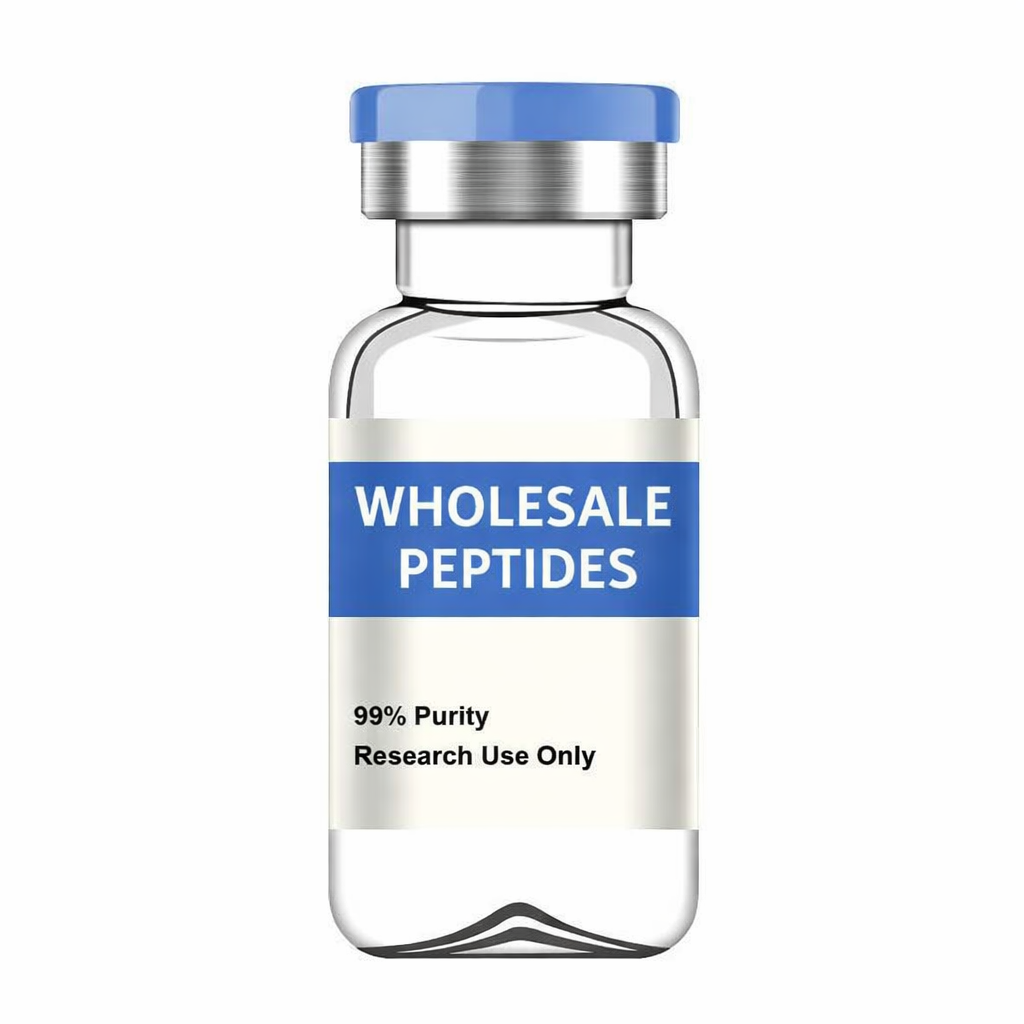
GHK-Cu 50mg/100mg x 10 Vials
GHK-Cu 50mg/100mg x 10 vials is a multi-vial research peptide format featuring Copper Tripeptide-1, a small copper-binding peptide that has attracted scientific interest in skin biology, extracellular matrix research, cellular communication, and tissue-related studies.
The peptide consists of the amino acids glycine, histidine, and lysine associated with copper. Because of this structure, it is frequently studied within research involving copper-dependent biological processes, fibroblast activity, connective-tissue pathways, and cellular signalling.
The 50mg and 100mg options provide different vial-strength configurations, while the ten-vial format offers multiple individually packaged units for research inventory and laboratory organisation.
What Is Copper Tripeptide-1?
Copper Tripeptide-1 is a naturally occurring peptide complex commonly known as GHK-Cu. It consists of a three-amino-acid sequence associated with copper.
Its scientific interest comes from the interaction between the peptide structure and copper, an essential trace element involved in numerous biological processes.
Researchers have investigated this compound in areas including:
- Skin and dermal biology
- Extracellular matrix research
- Fibroblast activity
- Collagen-related pathways
- Cellular communication
- Tissue remodelling
- Copper-dependent processes
- Cosmetic science
This broad research profile has made copper peptides an established area of interest within biochemical and dermatological research.
Copper Peptide Research
Copper-binding peptides provide researchers with an opportunity to study how small peptide structures interact with metal ions and biological systems.
Copper itself is involved in a variety of enzymatic and cellular processes. When associated with a peptide, it can be examined in models designed to understand molecular interactions, signalling pathways, and tissue biology.
Research surrounding this type of compound may therefore involve:
Cellular Signalling
Scientists can examine how peptide-related signals interact with cells and their surrounding environment.
Extracellular Matrix Biology
The extracellular matrix provides structural and biochemical support around cells. Research can explore how peptide signalling relates to this complex environment.
Fibroblast Research
Fibroblasts are important connective-tissue cells involved in producing components of the extracellular matrix.
Skin Biology
Because connective-tissue and cellular signalling pathways are important to skin structure, copper peptides are frequently investigated within dermatological and cosmetic science.
Skin and Dermal Research
The skin is a complex biological system consisting of multiple cell types, connective-tissue structures, proteins, and signalling molecules.
The dermis contains fibroblasts and an extensive extracellular matrix. These components contribute to the structural characteristics of skin and are therefore important subjects in laboratory research.
Copper Tripeptide-1 has been investigated in relation to several of these processes.
Research may examine relationships involving:
- Fibroblast behaviour
- Extracellular matrix organisation
- Collagen-associated processes
- Cellular communication
- Tissue remodelling
- Dermal biology
These research areas help explain why copper-containing peptides are frequently discussed in cosmetic and skincare science.
However, laboratory findings should not automatically be interpreted as proof of a specific cosmetic or therapeutic outcome.
Collagen and Extracellular Matrix Research
Collagen is an important structural protein found throughout connective tissue.
The extracellular matrix contains collagen together with elastin, glycoproteins, proteoglycans, and other components that help create the biological environment surrounding cells.
Research into Copper Tripeptide-1 has included investigations into pathways associated with extracellular matrix activity and collagen-related processes.
This makes the compound relevant to researchers studying how peptides interact with connective-tissue biology.
It is important to distinguish research into a biological mechanism from a claim that a particular product will produce a guaranteed result.
Copper and Biological Processes
Copper is an essential trace mineral involved in numerous enzymatic reactions.
It contributes to biological processes involving proteins, connective tissue, cellular metabolism, and antioxidant-related systems.
Copper-binding peptides are interesting to researchers because they provide a model for studying interactions between peptides and copper.
The resulting research can combine concepts from:
- Biochemistry
- Molecular biology
- Peptide chemistry
- Trace-element research
- Cellular biology
- Dermatological science
This broader scientific context makes Copper Tripeptide-1 relevant beyond skincare alone.
GHK-Cu vs AHK-Cu
GHK-Cu and AHK-Cu are sometimes grouped together because both are copper-associated tripeptides. However, they are different compounds.
The main distinction is their amino acid sequence.
| Feature | GHK-Cu | AHK-Cu |
|---|---|---|
| First amino acid | Glycine | Alanine |
| Second amino acid | Histidine | Histidine |
| Third amino acid | Lysine | Lysine |
| Copper associated | Yes | Yes |
| Compound identity | Different | Different |
This distinction is important when comparing research materials or maintaining laboratory records.
The compounds may have overlapping areas of scientific interest, but they should not be treated as interchangeable.
GHK-Cu vs Other Copper Peptides
Copper peptides are not all identical.
Different peptide sequences can influence molecular characteristics, biological interactions, and research applications.
For this reason, researchers should identify the exact peptide sequence and copper association rather than using the general term “copper peptide” as though it refers to one substance.
Accurate compound identification is particularly important when comparing products, analysing research results, or documenting laboratory experiments.
50mg and 100mg Vial Options
This product is presented in 50mg and 100mg vial-strength options.
The exact configuration should be confirmed against the product label before placing it into laboratory inventory.
For a ten-vial pack:
- 10 × 50mg = 500mg total labelled quantity
- 10 × 100mg = 1,000mg total labelled quantity
These figures represent the combined labelled amount across the respective pack and are not recommendations concerning use.
Clearly identifying the vial strength helps prevent confusion when managing different peptide products or batches.
Why Use a Ten-Vial Research Format?
A multi-vial format can be useful for research environments requiring several individually packaged units.
Potential organisational advantages include:
- Easier inventory management
- Individual vial identification
- Batch tracking
- Separation between research projects
- Convenient laboratory storage
- Multiple experimental applications
Researchers can maintain clearer records when each unit remains individually packaged and identifiable.
The appropriate quantity depends on the requirements of the particular research programme.
Lyophilised Peptide Formats
Many research peptides are supplied as lyophilised material.
Lyophilisation, also known as freeze-drying, removes water from a formulation and produces a dry peptide preparation.
This type of presentation is widely used for research compounds because it can provide a practical format for storage under specified conditions.
Storage requirements vary according to the compound, formulation, packaging, and manufacturer.
Researchers should therefore use the specific storage information supplied with their product rather than relying on generic peptide-storage advice.
Quality and Documentation
Quality assessment is an important part of responsible research-peptide procurement.
Researchers should consider:
- Exact compound identity
- Peptide sequence
- Labelled strength
- Batch number
- Purity information
- Analytical testing
- Packaging integrity
- Storage requirements
- Manufacturer documentation
A certificate of analysis, when available, should correspond to the relevant batch.
Good documentation supports traceability and makes it easier to identify exactly which material was used during a research project.
Storage and Handling
Peptide stability can be affected by temperature, light, moisture, and environmental conditions.
Research laboratories should follow the manufacturer’s current storage instructions for the specific formulation.
General considerations include protecting the material from:
- Excessive heat
- Direct sunlight
- Moisture
- Contamination
- Unnecessary temperature fluctuations
Handling procedures should also be consistent with the requirements of the laboratory and applicable regulations.
Copper Peptides in Cosmetic Science
Copper peptides have received significant attention in cosmetic research because of their relationship with skin and connective-tissue biology.
Scientific investigations have explored their interactions with cells, extracellular matrix components, and copper-dependent biological processes.
However, a research compound should not automatically be described as a clinically proven cosmetic treatment.
A responsible product page should distinguish between established scientific information, preliminary findings, and commercial claims.
This is particularly important for compounds that are sold in research-use formats.
Frequently Asked Questions
What is GHK-Cu 50mg/100mg x 10 vials?
It is a ten-vial research format containing a copper-associated tripeptide, commonly known as Copper Tripeptide-1. The available strengths are 50mg and 100mg per vial.
What is Copper Tripeptide-1?
Copper Tripeptide-1 is the common name associated with GHK-Cu, a three-amino-acid peptide complexed with copper.
What is this peptide researched for?
Research areas include skin biology, extracellular matrix processes, fibroblast activity, collagen-related pathways, cellular signalling, and copper-peptide interactions.
What does GHK mean?
The letters refer to the three amino acids in the peptide sequence: glycine, histidine, and lysine.
What does Cu mean?
“Cu” is the chemical symbol for copper, which is associated with the peptide.
What is the difference between the 50mg and 100mg versions?
The difference is the labelled amount per individual vial. Ten 50mg vials represent 500mg in total, while ten 100mg vials represent 1,000mg.
Is GHK-Cu the same as AHK-Cu?
No. Both are copper-associated tripeptides, but they have different amino acid sequences.
Is Copper Tripeptide-1 a research peptide?
It is widely studied in scientific research involving copper-peptide interactions, skin biology, extracellular matrix processes, and cellular signalling.
Is this a medical treatment?
A research product should not be represented as an approved medical treatment. Regulatory status can vary according to the product and jurisdiction.
Is this product intended for human use?
This page presents the material for research purposes only. It should not be marketed as a product for human consumption or self-administration.
Summary
GHK-Cu 50mg/100mg x 10 vials provides a multi-vial research format featuring Copper Tripeptide-1.
This peptide has attracted scientific interest in skin biology, fibroblast research, extracellular matrix processes, collagen-related pathways, cellular signalling, and copper-peptide chemistry.
The available 50mg and 100mg configurations allow researchers to select the appropriate labelled vial strength for their research inventory. Ten vials at 50mg represent 500mg total, while ten 100mg vials represent 1,000mg total.
Research Use Only. Not for human consumption or self-administration.
ghk cu,
ghk-cu,
ghk cu peptide,
ghkcu,
copper peptides,
peptides ghk,
copper peptide ghk-cu,
ghk-cu peptide,
copper ghk.
copper polypeptide,
ghkcu peptide,
ghk,
ghk peptide dosage,
copper ghk cu peptide,
copper peptides ghk-cu,
ghk cu dosage,
ghk cu serum,
ghk peptide.
| MG | 50MG, 100MG |
|---|
Related products
Recovery & Wellness
Hair & Aesthetics
Hair & Aesthetics
Hair & Aesthetics
GLP-1 / Weight Loss
Hair & Aesthetics
Recovery & Wellness
Hair & Aesthetics