
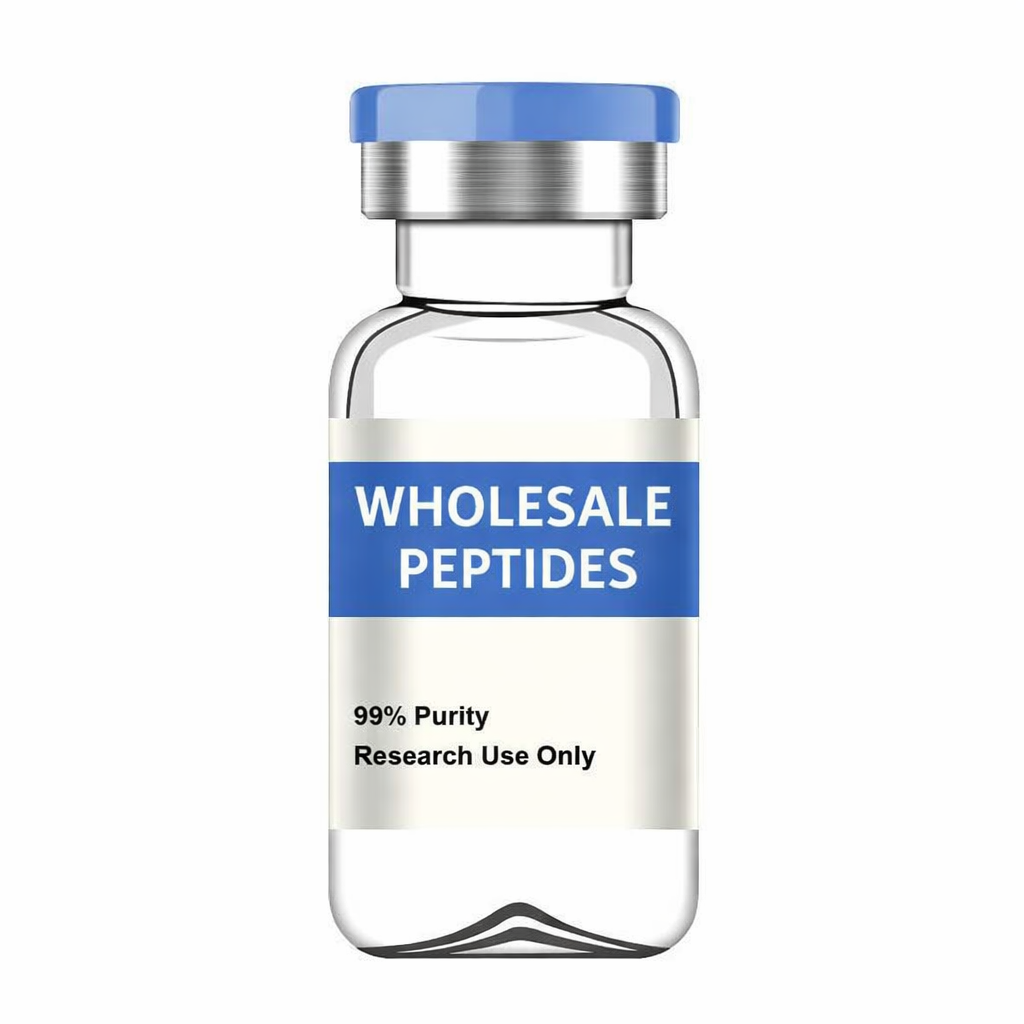
KLOW (BPC-157 + GHK-Cu + TB-500 + KPV) x 10 Vials
KLOW (BPC-157 + GHK-Cu + TB-500 + KPV) x 10 Vials are supplied as a four-peptide research blend for laboratory investigations involving tissue biology, extracellular-matrix research, cellular signalling, inflammatory pathways, and peptide research.
The formulation combines four chemically distinct research peptides: BPC-157, GHK-Cu, TB-500, and KPV. Unlike a single peptide, the blend contains separate molecules with different structures and research profiles. Current references describe the commonly cited formulation as 80mg total per vial, consisting of 50mg GHK-Cu, 10mg BPC-157, 10mg TB-500, and 10mg KPV.
Research Use Only. Not for human consumption, self-administration, diagnosis, treatment, or prevention of disease.
KLOW Peptide Research Blend
This four-component formulation brings together peptide materials investigated across several areas of molecular and cellular biology.
The individual components have been studied in areas including:
- Extracellular-matrix biology
- Fibroblast research
- Cellular migration
- Tissue biology
- Inflammatory signalling
- Skin biology
- Molecular signalling
- Wound-healing models
- Peptide-receptor research
It is important to distinguish research conducted on individual components from research on the complete combination. Available references indicate that the four-peptide blend itself has not been evaluated in a controlled clinical study.
What Is KLOW?
KLOW is a catalogue and research-market name for a combination of four separate peptides.
The commonly referenced composition is:
| Component | Labelled amount* | Research area |
|---|---|---|
| GHK-Cu | 50mg | Matrix and copper-peptide research |
| BPC-157 | 10mg | Tissue and cellular research |
| TB-500 | 10mg | Cell migration and cytoskeletal research |
| KPV | 10mg | Inflammatory signalling research |
| Total | 80mg | Four-peptide research blend |
*This represents the commonly cited 80mg formulation. Product ratios can vary between suppliers, so the actual product label and batch documentation should always be checked.
GHK-Cu and Matrix Research
GHK-Cu is a copper-associated tripeptide studied extensively in skin biology, extracellular-matrix research, and cellular signalling.
Research involving this component has examined areas such as:
- Fibroblast activity
- Collagen-related pathways
- Extracellular-matrix remodelling
- Cellular signalling
- Copper-dependent biology
- Skin research
- Gene-expression patterns
Within the commonly cited formulation, this is the largest component by mass, accounting for 50mg of an 80mg total.
BPC-157 Research
BPC-157 is a synthetic peptide that has been investigated primarily in experimental models of tissue and cellular biology.
Research areas include:
- Cellular migration
- Vascular biology
- Connective-tissue research
- Angiogenic pathways
- Gastrointestinal biology
- Tissue-repair models
Much of the evidence surrounding this peptide comes from preclinical studies rather than controlled human trials. Consequently, experimental findings should not be presented as established clinical benefits.
TB-500 Research
TB-500 is associated with research involving thymosin beta-4-related biology, particularly cellular migration and cytoskeletal processes.
Research into thymosin beta-4 and related peptide biology has examined:
- Actin dynamics
- Cell migration
- Wound closure models
- Cellular movement
- Tissue biology
- Re-epithelialisation
TB-500 should not automatically be considered identical to full-length thymosin beta-4. Their molecular identities and research contexts are distinct.
KPV Research
KPV is a short tripeptide consisting of lysine-proline-valine and corresponds to the C-terminal sequence of alpha-melanocyte-stimulating hormone.
Research has investigated this peptide in relation to:
- Inflammatory signalling
- NF-κB pathways
- Cytokine-related biology
- Intestinal epithelial research
- Cellular inflammatory responses
- Peptide transport
These findings largely come from experimental cellular and animal models.
Four Distinct Research Pathways
One of the most important characteristics of this formulation is that it contains four separate molecules rather than one new chemical compound.
Each component therefore has its own research literature.
| Peptide | Primary research theme |
|---|---|
| GHK-Cu | Matrix, copper and skin biology |
| BPC-157 | Tissue and cellular research |
| TB-500 | Cytoskeletal and migration research |
| KPV | Inflammatory signalling |
This distinction is important when interpreting scientific literature. Evidence concerning one component cannot automatically be considered evidence for the complete blend.
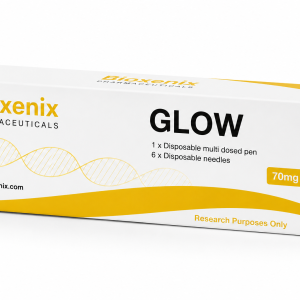
KLOW vs GLOW
The two formulations are closely related in composition.
A commonly described GLOW formulation contains:
- GHK-Cu
- BPC-157
- TB-500
The addition of KPV creates the four-component KLOW formulation. Current research references describe KLOW as the three-component combination plus KPV.
| Feature | GLOW | KLOW |
|---|---|---|
| GHK-Cu | Yes | Yes |
| BPC-157 | Yes | Yes |
| TB-500 | Yes | Yes |
| KPV | No | Yes |
| General research focus | Matrix and tissue research | Matrix, tissue and inflammatory research |
Because the combination itself has limited direct evidence, comparisons should be understood as compositional rather than clinical.
Cellular and Tissue Research
The four components cover several different areas of experimental biology.
Research may investigate relationships involving:
- Fibroblast activity
- Extracellular-matrix signalling
- Cellular migration
- Vascular pathways
- Inflammatory mediators
- Tissue remodelling
- Cellular stress
- Molecular signalling
This makes the blend relevant to multidisciplinary research involving cell biology, peptide science, and tissue models.
Skin and Cosmetic Research
The GHK-Cu component has generated particular interest in skin and extracellular-matrix research.
Laboratory investigations can examine:
- Collagen-related processes
- Fibroblast biology
- Extracellular matrix
- Cellular signalling
- Skin-cell behaviour
- Tissue remodelling
However, evidence from isolated laboratory studies should not be interpreted as proof that the complete four-peptide formulation produces a cosmetic or therapeutic effect in humans.
Inflammatory Pathway Research
KPV has been investigated in experimental models involving inflammatory signalling.
Researchers may study pathways involving:
- NF-κB
- Cytokine signalling
- Cellular inflammatory responses
- Intestinal epithelial biology
- Peptide transport
The addition of this component creates a research interest distinct from the matrix and tissue pathways associated with the other components.
Research Evidence and Limitations
The individual ingredients have separate bodies of preclinical research, but that does not establish the same evidence level for the complete blend.
Current KLOW research references explicitly note that the combination itself has not been tested in a controlled study. Claims that the four components necessarily act synergistically therefore remain hypotheses based on individual-component research.
This distinction is particularly important for responsible scientific and SEO content.
KLOW x 10 Vials Format
The requested format contains 10 individual research vials.
If each vial follows the commonly cited 80mg composition, the theoretical labelled totals across ten vials would be:
| Component | Per vial | 10-vial total |
|---|---|---|
| GHK-Cu | 50mg | 500mg |
| BPC-157 | 10mg | 100mg |
| TB-500 | 10mg | 100mg |
| KPV | 10mg | 100mg |
| Total | 80mg | 800mg |
These quantities apply only if your specific product uses the commonly cited 50/10/10/10mg formulation. Because blend ratios are not universally standardized, the actual product label should be used as the authoritative specification.
Product Quality and Documentation
For a multi-component research product, documentation is particularly important.
Researchers should review available information covering:
- Individual component identity
- Labelled quantities
- Purity
- Batch or lot number
- Certificate of Analysis
- Analytical testing
- Manufacturing specifications
- Packaging
- Storage requirements
For blends, component-level analytical information can be especially useful when available because an overall purity figure does not necessarily describe the purity of every individual component.
Storage Considerations
Storage requirements should follow the manufacturer’s current documentation.
Researchers should consider:
- Temperature requirements
- Moisture exposure
- Light exposure
- Packaging integrity
- Stability information
- Handling conditions
Because stability can differ between formulations, product-specific instructions should take priority.
Research-Only Information
This product is presented strictly as a research material.
It should not be represented as a medicine, supplement, cosmetic treatment, or therapy. No human-use dosing or administration instructions are provided here.
The scientific evidence for the individual components should also be distinguished from evidence for the complete combination.
Researchers should follow appropriate laboratory safety procedures, institutional requirements, and applicable regulations.
Frequently Asked Questions
What is KLOW?
KLOW is a research-market name for a four-peptide formulation containing GHK-Cu, BPC-157, TB-500, and KPV. It is a blend of separate molecules rather than a single chemical compound.
What peptides are in the blend?
The commonly cited formulation contains GHK-Cu, BPC-157, TB-500, and KPV.
What is the common composition?
A widely referenced research formulation contains 50mg GHK-Cu, 10mg BPC-157, 10mg TB-500, and 10mg KPV, for 80mg total per vial.
Is KLOW the same as GLOW?
No. GLOW is generally described as the three-component combination of GHK-Cu, BPC-157, and TB-500, while KLOW adds KPV.
Has the complete blend been clinically tested?
Available research references indicate that the complete four-peptide combination has not been tested in a controlled clinical study. Evidence concerning the individual components should therefore not be treated as evidence for the blend itself.
How many vials are included?
This product format contains 10 individual research vials.
Is the product intended for human use?
No. It is presented for laboratory research only and is not intended for human consumption or self-administration.
Summary
KLOW (BPC-157 + GHK-Cu + TB-500 + KPV) x 10 Vials provide a multi-vial format containing four distinct research peptides associated with matrix biology, cellular signalling, tissue research, cytoskeletal processes, and inflammatory pathways.
The commonly cited formulation contains 80mg total per vial, although product ratios can vary. Most importantly, evidence relating to the individual components should not be confused with direct evidence for the complete blend, as controlled studies of the combination remain limited.
Related products
Hair & Aesthetics
Pen Kits (prefilled)
Hair & Aesthetics
Recovery & Wellness
Hair & Aesthetics
Performance & Muscle Building
Hair & Aesthetics
Recovery & Wellness