
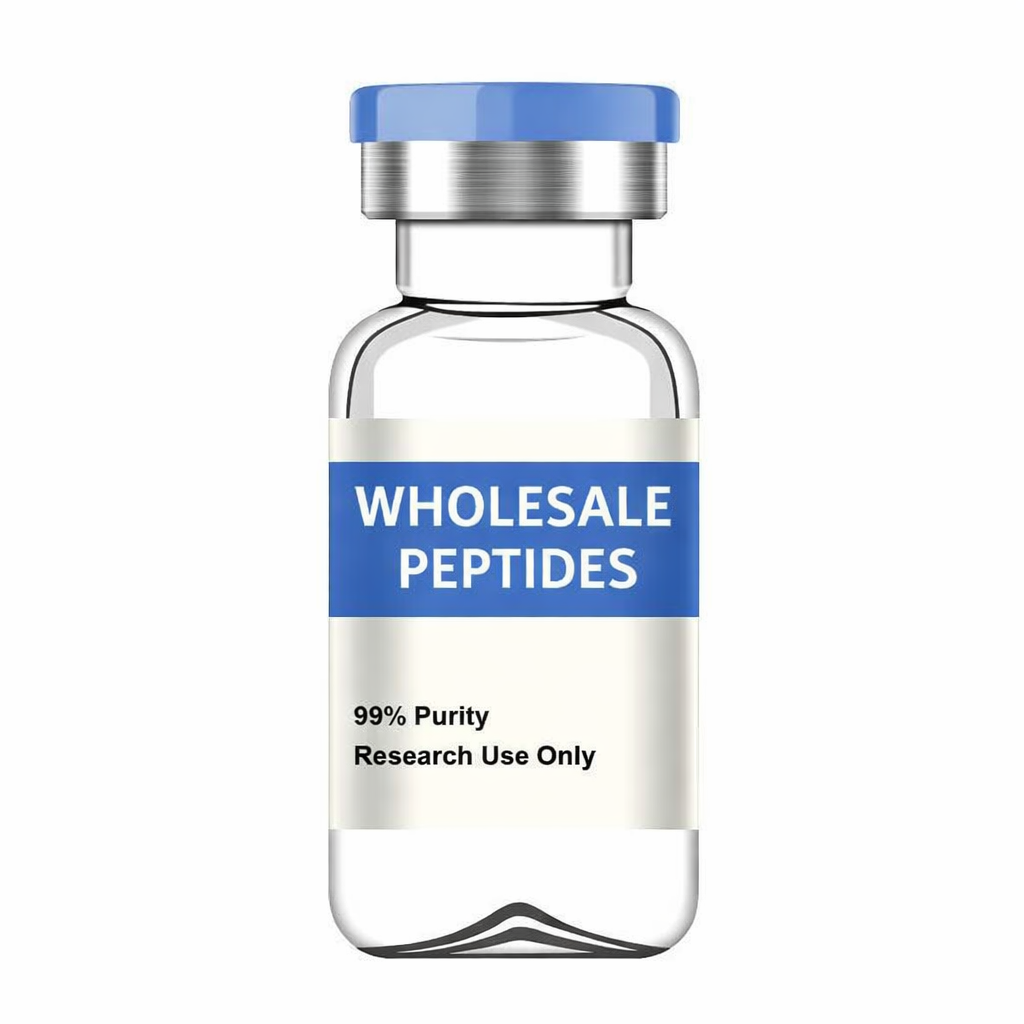

IGF-1 LR3 x 10 Vials
IGF-1 LR3 x 10 Vials are supplied as a research material for laboratory investigations involving insulin-like growth factor signalling, receptor biology, cellular growth pathways, and molecular research.
IGF-1 LR3 is a modified research analogue of insulin-like growth factor-1 (IGF-1). Its extended structure has made it a subject of experimental research involving IGF receptor activity, intracellular signalling, cellular metabolism, and growth-factor biology.
Research Use Only. Not for human consumption, self-administration, diagnosis, treatment, or prevention of disease.
IGF-1 LR3 in Growth-Factor Research
Insulin-like growth factor signalling is an important area of molecular biology because it participates in processes involving cellular growth, differentiation, metabolism, and tissue biology.
Research involving this analogue can examine pathways associated with:
- IGF receptor activation
- Cellular signalling
- Protein synthesis
- Cell growth
- Cellular metabolism
- Muscle-cell biology
- Tissue development
- Growth-factor interactions
The IGF system is complex, involving several ligands, receptors, binding proteins, and intracellular pathways.
What Is IGF-1 LR3?
IGF-1 LR3 is a modified form of IGF-1 designed for research into growth-factor signalling.
The “LR3” designation refers to structural modifications that distinguish this analogue from native IGF-1. One notable modification involves an extended N-terminal sequence, while another reduces interaction with certain IGF-binding proteins.
These structural characteristics make the molecule useful for laboratory investigations examining IGF-related receptor and signalling mechanisms.
Insulin-Like Growth Factor Research
Native IGF-1 is an important component of the somatotropic axis.
Growth hormone can influence IGF-1 production, particularly in the liver, while IGF signalling subsequently participates in numerous biological processes.
Research into this system can involve:
- Growth hormone pathways
- IGF-1 receptor activity
- Tissue growth
- Cellular differentiation
- Protein metabolism
- Glucose metabolism
- Muscle biology
- Bone biology
This provides a broad research framework spanning endocrinology, molecular biology, and cellular physiology.
IGF-1 Receptor Signalling
The IGF-1 receptor (IGF1R) is a transmembrane receptor belonging to the receptor tyrosine kinase family.
When activated by an appropriate ligand, receptor signalling can influence several intracellular pathways.
Important pathways investigated in laboratory research include:
PI3K/Akt Signalling
The PI3K/Akt pathway is associated with cellular survival, metabolism, and growth-related signalling.
MAPK/ERK Signalling
MAPK and ERK pathways are involved in cellular proliferation, differentiation, and signal transduction.
Protein Synthesis
IGF-related signalling can interact with pathways involved in regulation of protein synthesis and cellular growth.
Studying these mechanisms can help researchers understand how growth-factor receptors communicate with intracellular systems.
IGF-1 LR3 and Cellular Biology
Growth-factor signalling has broad relevance across cell biology.
Researchers may investigate relationships between IGF signalling and:
- Cellular proliferation
- Differentiation
- Survival pathways
- Metabolic activity
- Protein synthesis
- Mitochondrial function
- Tissue-specific signalling
The effects observed in experimental models can vary depending on cell type, receptor expression, experimental conditions, and concentration.
Muscle Biology Research
The IGF signalling system is widely studied in muscle-cell biology.
Research may examine relationships involving:
- Muscle-cell differentiation
- Myoblast biology
- Protein synthesis
- Cellular growth
- Satellite-cell signalling
- Muscle regeneration pathways
These studies help researchers investigate how growth-factor pathways interact with skeletal muscle development and cellular responses.
Experimental findings should not be interpreted as evidence that a research compound produces a particular outcome in humans.
Bone and Tissue Research
IGF-related pathways are also relevant to studies of bone and connective-tissue biology.
Researchers investigate the role of growth-factor signalling in areas such as:
- Osteoblast activity
- Cartilage biology
- Connective-tissue signalling
- Cellular differentiation
- Tissue development
- Extracellular matrix research
The IGF system therefore provides a useful model for studying communication between growth factors and tissue-specific cells.
IGF-1 vs IGF-1 LR3
The two molecules are related but are not identical.
| Feature | IGF-1 | IGF-1 LR3 |
|---|---|---|
| Classification | Endogenous growth factor | Modified IGF-1 analogue |
| Receptor research | IGF1R | IGF1R |
| Structure | Native peptide | Modified structure |
| Binding characteristics | Interacts with IGF-binding proteins | Modified binding characteristics |
| Research focus | Endocrine and cellular biology | Growth-factor and receptor research |
The structural differences are important when interpreting experimental results.
Growth Hormone and IGF Signalling
Growth hormone and IGF-1 belong to interconnected endocrine pathways but are different biological molecules.
Growth hormone is produced by the pituitary gland, while IGF-1 is produced in several tissues and is an important downstream component of the somatotropic axis.
Research into their relationship can examine:
- GH receptor signalling
- Hepatic IGF-1 production
- IGF1R activity
- Growth-factor feedback
- Endocrine regulation
- Tissue-specific responses
This distinction is important when designing experiments involving growth-factor biology.
IGF-1 LR3 x 10 Vials Format
The product format described here contains 10 individual research vials.
The exact amount per vial should always be confirmed using the current product label, product specification, and batch documentation.
Researchers should avoid assuming the total quantity without verifying the labelled strength of each individual vial.
Research Applications
This material may be relevant to laboratory research involving:
- IGF1R receptor biology
- Growth-factor signalling
- PI3K/Akt research
- MAPK/ERK pathways
- Muscle-cell biology
- Cellular proliferation
- Protein synthesis research
- Tissue development
- Endocrine signalling
- Molecular biology
- Cellular metabolism
Its modified structure provides researchers with a distinct model for studying IGF-related mechanisms.
Product Quality and Documentation
Quality and analytical documentation are important when selecting research peptides and growth-factor analogues.
Researchers should consider available information relating to:
- Identity
- Purity
- Batch number
- Certificate of Analysis
- Analytical testing
- Manufacturing specifications
- Packaging
- Storage conditions
Batch-specific documentation can help laboratories maintain consistency across experimental work.
Storage Considerations
Storage requirements should follow the manufacturer’s current instructions and product documentation.
Researchers should consider:
- Temperature requirements
- Moisture protection
- Light exposure
- Packaging integrity
- Product stability
- Handling conditions
Because stability may depend on formulation and packaging, the supplied documentation should always take precedence.
Research-Only Information
This material is presented exclusively for scientific and laboratory research.
It should not be presented as a medicine, bodybuilding treatment, hormone therapy, or nutritional supplement. Experimental research findings should not automatically be interpreted as evidence of human safety or clinical effectiveness.
Researchers should follow appropriate laboratory safety procedures, institutional requirements, and applicable regulations.
Frequently Asked Questions
What is IGF-1 LR3?
IGF-1 LR3 is a modified analogue of insulin-like growth factor-1 studied in laboratory research involving growth-factor signalling and IGF receptor biology.
What receptor is associated with IGF-1 research?
The principal receptor associated with IGF-1 signalling is the insulin-like growth factor-1 receptor, or IGF1R.
What pathways are studied?
Common research pathways include PI3K/Akt and MAPK/ERK signalling, along with cellular growth, differentiation, metabolism, and survival mechanisms.
Is IGF-1 LR3 the same as natural IGF-1?
No. It is a structurally modified analogue and should not be treated as chemically identical to endogenous IGF-1.
Is it the same as growth hormone?
No. Growth hormone and IGF-1 are different molecules that participate in interconnected endocrine pathways.
How many vials are included?
The listed format contains 10 individual research vials. The labelled amount per vial should be verified from the current product specification.
Is this product intended for human use?
No. It is presented for laboratory research only and is not intended for human consumption or self-administration.
Summary
IGF-1 LR3 x 10 Vials provide a research format for investigating insulin-like growth factor signalling, IGF1R receptor activity, intracellular pathways, cellular growth, muscle biology, tissue research, and molecular endocrinology.
The modified structure distinguishes this analogue from native IGF-1 and provides researchers with a separate model for studying growth-factor receptor mechanisms and downstream cellular signalling.
igf 1 lr3,
igf-1 lr3,
igf1 lr3,
igf 1 peptide,
igf1-lr3,
agf 1,
igf-1 peptide,
igf-1lr3,
igf1 peptide,
igf 1 lr3 dosage,
lr3 igf,
igf peptide.
| MG | 0.1MG, 1MG |
|---|
Related products
GLP-1 / Weight Loss
GLP-1 / Weight Loss
GLP-1 / Weight Loss
Performance & Muscle Building
Performance & Muscle Building
GLP-1 / Weight Loss
GLP-1 / Weight Loss
Performance & Muscle Building