
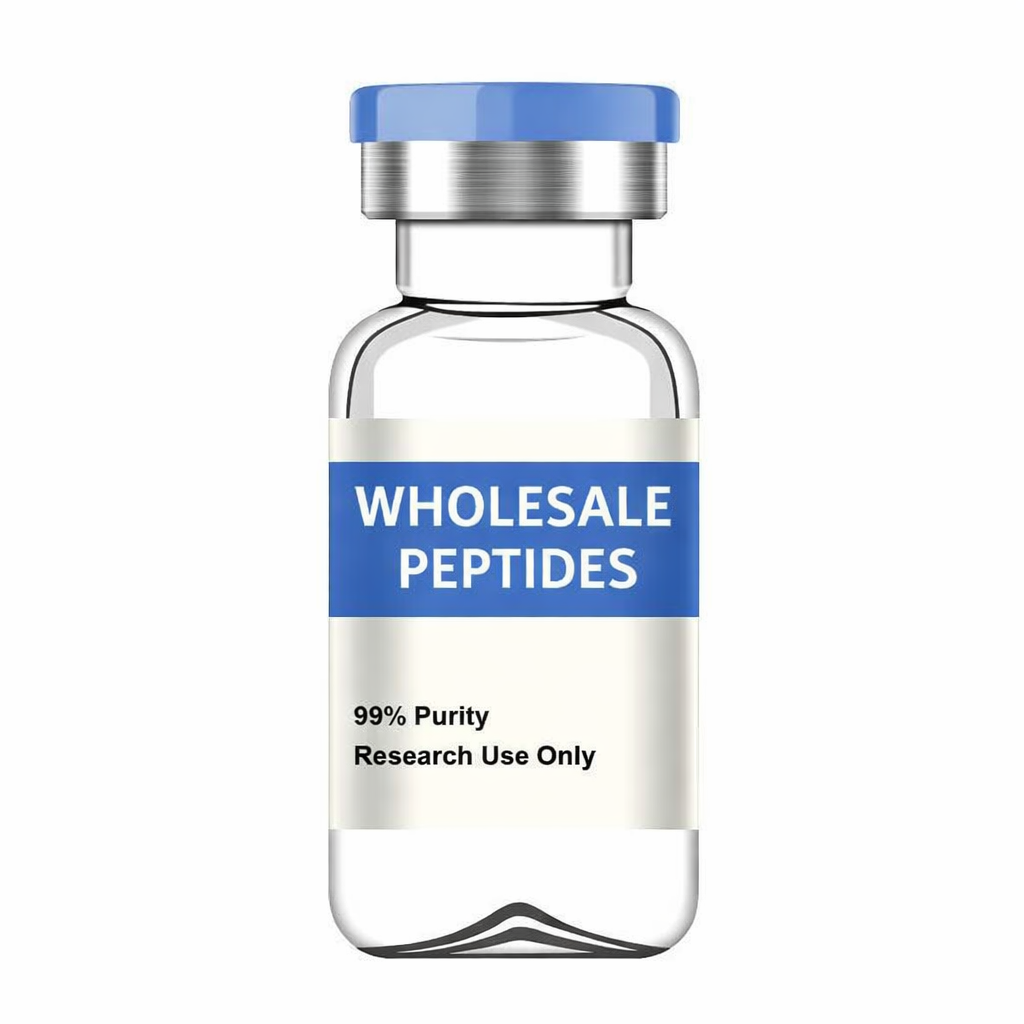
GLOW (BPC-157 + GHK-Cu + TB-500) x 10 Vials
GLOW x 10 vials is a multi-peptide research blend combining BPC-157, GHK-Cu and TB-500 in a single lyophilised formulation. The blend is designed for laboratory research examining cellular signalling, extracellular matrix biology, tissue-related pathways and peptide interactions.
A commonly specified GLOW formulation contains 70mg of total peptide per vial, consisting of 50mg GHK-Cu, 10mg BPC-157 and 10mg TB-500.
GLOW Peptide Blend Composition
Each standard 70mg vial contains three distinct research peptides:
| Component | Amount per vial | Primary research area |
|---|---|---|
| GHK-Cu | 50mg | Copper-peptide and extracellular matrix research |
| BPC-157 | 10mg | Cellular and tissue biology research |
| TB-500 | 10mg | Cell migration and cytoskeletal research |
| Total | 70mg | Multi-peptide research |
The 10-vial pack therefore represents a nominal total of 700mg of peptide material, assuming every vial follows the standard 50/10/10mg composition.
For 10 vials, that corresponds to:
- 500mg GHK-Cu
- 100mg BPC-157
- 100mg TB-500
- 700mg total peptide material
Always verify the actual composition and batch information against the product label and applicable Certificate of Analysis.
What Is GLOW?
GLOW is a three-component peptide research formulation rather than a single molecular compound. Its three ingredients have different molecular structures and research characteristics.
The combination is primarily of interest to researchers studying several biological pathways within the same experimental framework. However, the presence of multiple compounds should not be interpreted as proof that the combination produces a particular therapeutic or physiological outcome.
Independent product testing currently available for similarly formulated 70mg batches has reported identification by LC-MS and HPLC purity testing. One recent batch report measured approximately 99.3% purity, while the measured amounts of individual components can vary from their nominal label amounts.
GHK-Cu Research
GHK-Cu is a copper-associated tripeptide widely studied in skin and extracellular matrix research.
Research involving this copper peptide has examined areas such as:
- Extracellular matrix biology
- Fibroblast-related signalling
- Collagen research
- Copper-dependent cellular pathways
- Skin biology
- Tissue remodelling
- Cellular signalling
- Cosmetic science
Its inclusion gives the blend a strong connection to copper-peptide and dermal research.
BPC-157 Research
BPC-157 is an experimental peptide that has been investigated in preclinical research involving cellular and tissue-related processes.
Research areas associated with BPC-157 include:
- Cellular signalling
- Tissue biology
- Vascular research
- Experimental wound models
- Growth-factor-related pathways
- Gastrointestinal research
- Molecular repair mechanisms
Most evidence remains experimental, particularly when considering applications outside controlled laboratory models.
TB-500 Research
TB-500 is commonly described as a synthetic peptide related to thymosin beta-4 research.
Studies involving thymosin-related pathways have examined biological processes including:
- Cell migration
- Cytoskeletal organisation
- Actin-associated mechanisms
- Tissue biology
- Angiogenesis research
- Cellular movement
- Regenerative biology
The exact biological activity of a commercial TB-500 preparation depends on its molecular identity, formulation and analytical documentation.
GLOW in Peptide Research
The main research interest in this formulation comes from bringing three different peptide research areas together.
Copper-peptide research focuses on extracellular matrix and cellular signalling.
BPC-157 research provides another experimental model for studying cellular and tissue-related pathways.
TB-500 research contributes a separate area involving cell migration and cytoskeletal biology.
Together, these components create a multi-compound research model that can be useful when researchers want to investigate interactions between different signalling pathways.
However, evidence concerning the complete combination should not be confused with evidence for the individual ingredients. There is currently no strong clinical evidence establishing that this specific three-peptide formulation provides a particular benefit in humans.
GLOW x 10 Vials: Product Specifications
| Specification | Details |
|---|---|
| Product | GLOW peptide blend |
| Pack size | 10 vials |
| Nominal strength | 70mg per vial |
| GHK-Cu | 50mg per vial |
| BPC-157 | 10mg per vial |
| TB-500 | 10mg per vial |
| Total nominal peptide | 700mg per 10 vials |
| Physical form | Lyophilised powder |
| Product type | Multi-peptide research blend |
| Intended use | Laboratory research only |
Because blend names are not universally standardised between suppliers, researchers should rely on the ingredient list, stated mass per vial and batch-specific documentation rather than the product name alone. Current examples of GLOW products consistently show the 50/10/10mg composition, but batch documentation remains the best reference.
Quality and Batch Documentation
For research applications, analytical documentation is particularly important when working with multi-component formulations.
Researchers should look for:
- Batch or lot identification
- HPLC purity analysis
- Mass spectrometry confirmation
- Individual component identification
- Net peptide content
- Manufacturing information
- Appropriate storage information
- A batch-specific Certificate of Analysis where available
Third-party reports for GLOW formulations have used HPLC and LC-MS to evaluate purity and identity.
Storage and Laboratory Handling
Lyophilised peptide products should be maintained according to the manufacturer’s current storage specification and protected from unnecessary exposure to heat, moisture and light.
For laboratory work, researchers should:
- Keep the original vial sealed until required.
- Follow the manufacturer’s storage instructions.
- Avoid unnecessary temperature fluctuations.
- Minimise repeated freeze-thaw exposure where applicable.
- Maintain appropriate laboratory documentation.
- Use the batch-specific Certificate of Analysis when available.
Specific reconstitution or administration instructions are intentionally not provided because this product is supplied for research purposes rather than human use.
GLOW vs Individual Peptides
A pre-formulated blend offers a fixed composition for research designs where all three compounds are being investigated together.
| Research material | Main research emphasis |
|---|---|
| GHK-Cu | Copper-peptide, skin and matrix biology |
| BPC-157 | Cellular and tissue research |
| TB-500 | Cell migration and cytoskeletal research |
| GLOW | Combined multi-peptide research |
The advantage of a defined blend is consistency of the nominal component ratio. Researchers requiring independent control over each compound may instead prefer individual peptide preparations.
Frequently Asked Questions
What is GLOW?
GLOW is a three-peptide research blend containing GHK-Cu, BPC-157 and TB-500. A commonly listed formulation contains 50mg GHK-Cu, 10mg BPC-157 and 10mg TB-500 per 70mg vial.
How many vials are included?
This product contains 10 vials.
How much peptide is in 10 vials?
Using the standard 70mg-per-vial formulation, 10 vials contain 700mg of nominal total peptide material.
What is the composition?
The commonly specified composition is 50mg GHK-Cu, 10mg BPC-157 and 10mg TB-500 per vial.
Is this product approved for human use?
No. It should be treated as a laboratory research product and is not intended for human or veterinary use.
Does GLOW have the same evidence as its individual components?
No. Individual components may have separate preclinical or biochemical literature, but that does not establish the safety or effectiveness of the complete three-peptide combination.
Is a Certificate of Analysis important?
Yes. A batch-specific COA can provide useful information about identity, purity and measured content. Researchers should review the documentation for the exact batch supplied.
Research Disclaimer
GLOW is supplied strictly for laboratory research and scientific investigation. It is not intended for human or veterinary consumption or administration. It is not a medicine, dietary supplement or cosmetic product and has not been established as safe or effective for treating or preventing disease. Researchers are responsible for complying with all applicable laws, institutional requirements and laboratory safety procedures.
glow peptide,
glowing peptides,
peptides before after,
peptides before and after,
glow stack peptide,
glow pen,
glow stack,
before and after peptides.
Related products
Hair & Aesthetics
Performance & Muscle Building
Performance & Muscle Building
Pen Kits (prefilled)
Recovery & Wellness
Longevity & Cellular Health
Hair & Aesthetics
Hair & Aesthetics